How to use Essential Oils in Pregnancy

Can you use essential oils in pregnancy?

Essential Oils can actually be very supportive in pregnancy, many women naturally become more connected to their body and more considerate and caring of themselves at this time – so using essential oils can be a lovely way to nurture and support through out this precious cycle.

There are important cautions to be observed when using essential oils anyway and a few more during pregnancy so I have written this blog to ensure you use them safely and confidently.

Professionals are advised not to treat during the first tri-mester in training, I’m sure this is because miscarriage is so common during this period and because there are cautions with using essential oils, therefore it may be simpler and safer to take them out of the equation. I suspect most people are exposed to millions more harmful products than essential oils through out their day but I would still err on the side of caution and avoid them in the initial stages unless you have support from an experienced professional and feel 100% confident.

Below are the most useful ways I have used essential oils with clients… (use the links at the end for instructions on how to make balms, creams, massage blends & roller ball blends).

  • Which Essential Oils?

Some essential oils are contraindicated in pregnancy and should not be used. Those mentioned in this blog are safe to use but you should ensure you use a trustworthy source*. Those that are suitable must be used at a much lower dilution as they are absorbed through the skin and as with most things you do during pregnancy, can have an affect on the baby too

  • Dilution

Essential Oils should always be diluted before skin application. In pregnancy I usually go with 0.25-0.5% but 1% is the maximum dilution I would use. The scent may be quite delicate but this is more than enough to be effective. Click to view a chart showing how many drops to use.

  • Nausea & Morning Sickness

Essential Oils: I use a blend of cardamom, spearmint & neroli – you could use a mix of these or on their own depending on which scents you like, many women become hypersensitive to smell during pregnancy. All three are soothing & calming to the digestive system & their scent not too intense. You could also try simply lemon essential oil, the fresh, clean scent can also help.

Use: An inhaler stick or roller ball bottle is most practical for this blend as you can carry it around and breath in or apply it whenever you feel to, whether it is to avoid the feeling of sickness or to soothe it when you do feel it.

  • Stretch Marks

Essential Oils: Lavender, roman chamomile and mandarin with a base of rosehip and calendula carrier oils. The essential oils are all great for skin care but remember to ensure you get pure Lavender Oil with the Latin name Lavandula angustifolia*.

Use: A massage oil, balm or cream would work best in this case, I would suggest which ever you like the feel of most because consistency is key in nourishing your skin at this time – if you love using it you’re more likely to do so everyday. You can start application when ever you notice that your tummy is beginning to grow, check out the blog How to make a Stretch Mark Balm for more details on making and using this.

  • Back Ache

Essential Oils: Back pain and ache is common especially during the later stages of pregnancy along with various other aching body parts so using a massage oil or balm with lavender and chamomile essential oil would help to ease this.

Use: It is not usually appropriate or comfortable to lie on your tummy to receive a back massage, I have done them with a client lying on their side, or seated –which ever is most comfortable for you. ‘Some doctors specifically recommend that pregnant women sleep on the left side. Because your liver is on the right side of your abdomen, lying on your left side helps keep the uterus off that large organ. Sleeping on the left side also improves circulation to the heart and allows for the best blood flow to the fetus, uterus, and kidneys.’ https://kidshealth.org/en/parents/sleep-during-pregnancy.html

  • Tired Feet

A foot massage with a cooling aloe gel mixed with spearmint (not peppermint as it is much stronger so avoid this) or lavender to ease and refresh tired weary feet (Lavandula angustifolia).

  • Oedema/ Water Retention

Essential Oil: Geranium essential oil can help with water retention.

Use: In a cream, balm or massage oil to apply to the affected area can be supportive.

  • Moods

Essential Oil: Geranium essential oil has a balancing effect on the endocrine system so can be very supportive through out pregnancy.

Use: See blog on How to Use Geranium Essential Oil to Support Women’s Health.

  • Inducing Labour

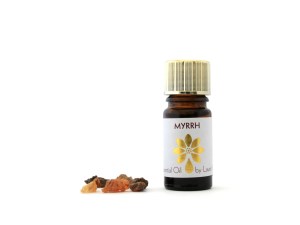
Many people ask me about using essential oils to help induce labour. Although I would advise letting things unfold naturally, myrrh oil is a uterine tonic and so can be used to prepare for the birth but not during the rest of the pregnancy. I would wait for the due date to pass and use in a massage oil around your bump.

  • Labour

Something practical and easy to use is a floral water, you can spritz this on your face and across your body – it’s very gentle – much more so than essential oils and has a refreshing and calming effect – rose water is my favourite but you could use lavender or neroli. It also has the added benefit of calming others in the room and cleansing the atmosphere which is desirable, especially if you are in a hospital setting.

  • *Lavender Oil in Pregnancy

When it comes to lavender there is some concern about its use, but ‘Lavandula angustifolia‘ is safe to use –some other types of lavender oil have a higher camphor content. It’s important to use a trustworthy source of essential oil because some can be adulterated and mixed with synthetic products or mixed with cheaper lavender oils which are higher in camphor.

All of the products mentioned can be purchased as bespoke blends made especially for you. Please get in touch if you have any concerns or queries or would like personal support and remember to continue to care and nurture yourself just as much as your baby.

How to get through December and still smell Divine… with the most Delicious Essential Oils!

The lead up to the end of the year can often feel a little fretful rather than festive, so here are some recommendations for essential oils to support you as the ‘silly season‘ takes over:

Image by Jane Torvaney

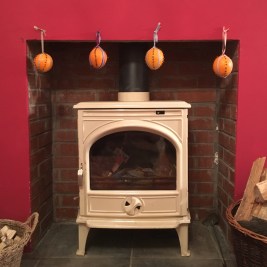
Orange & Clove for a warming, comforting scent that has a powerful cleansing & anti-microbial action, a perfect combination for using in a burner or diffuser* to scent your home and ward off winter bugs. You can get a similar effect by piercing cloves into the peel of an orange which releases their essential oils – as well as smelling delicious it will sanitise the atmosphere. Place them around your home, especially close to the fire as the heat will encourage more essential oils to be released.

Fir & Pine for supporting the immune system & respiratory conditions during vulnerable times. Use these Christmas tree oils on a tissue and inhale throughout the day, or blend them into a balm* to massage across your chest – you can use them in this way if you have come down with a cold, flu or virus and also if you want to avoid them.

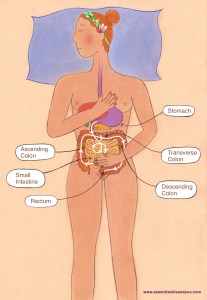
Cardamom & Grapefruit to help soothe, digest & detox – these would be lovely made into a blend* if you happen to have over indulged over the Christmas period. Find a comfortable place to lay down, massage the ‘digestive blend’ around your tummy in gentle anti-clockwise circles, begin just under your ribcage and massage around the centre of your tummy covering the small intestine, gradually moving down towards the start of the ascending colon, follow this up the right side of your body, as it becomes the transverse colon across the body under the ribs and then onto the descending colon down the left side of your body. Finish with a few large anti-clockwise circles and take a moment to rest.

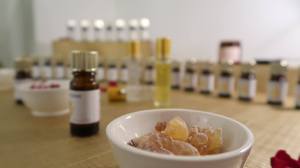
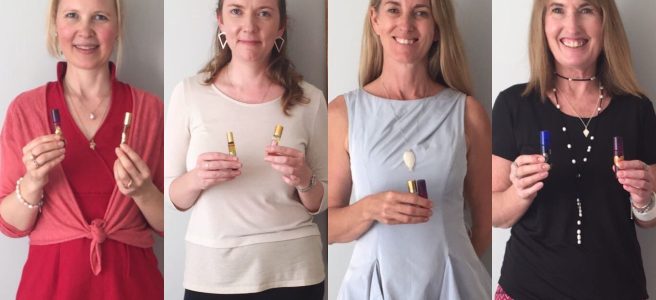
Frankincense & Myrrh – these two oils come with extremely precious qualities, they support moments to stop, breathe gently and come back to yourself – especially useful during times of stress and overwhelm. I like to use them in a roll-on perfume blend* to keep in my pocket and apply when ever I feel to.

You can use all of the recommended blends in a burner or diffuser* to scent your home, or dilute in a carrier oil to massage into your skin and add to a bath*.

Any oil you choose to use with the intention to truly nurture and take care of yourself will support on some level, so enjoy experimenting and feel free to get in touch if you would like assistance.

*Useful Links: How to make a balm.
How to make a body and bath oil blend.
How to make a roll on perfume blend.

How to Use Geranium Essential Oil to Support Women’s Health

The key reason I use geranium essential oil is for its balancing effect on the endocrine system. When you consider how much the endocrine system and our hormones play a key role in every part of running our bodies, geranium oil becomes a useful tool to support health and wellbeing, especially with regards to a woman’s health and her cycle.

Geranium Essential Oil – Pelargonium graveolens flower oil

It’s important to actually see and feel how, as women, we are constantly in a cycle, whether it be our monthly menstrual cycle, which goes through various phases as shown in the video below by UnimedLiving, or our life cycle as a woman and the way we move from beginning our periods as a girl or young woman to menopause and beyond… I like to think of it as the way a rose begins to bud and bloom, continuing to open until each petal eventually falls. Even when all the petals have fallen the cycle is not over, it is then that rose hips begin to form, a stage as gorgeous as the flowering… Just as with women, when our  monthly bleed ceases, there is much to appreciate and enjoy as a woman enters her elder years.

Geranium is an oil you can use to support you, your connection to your cycle and your body at any stage in life. The key is to use the oil to support the whole cycle, rather than as a quick fix when you feel tension (and all the other possible symptoms such as moods, exhaustion, hot flushes, period pain, bloating, breakouts, cravings etc.) – although it can still help at these more intense times, it would be more effective to make it a regular ritual.

For example you could use geranium essential oil in the following ways:

How ever you decide to use geranium oil, make sure it feels lovely, that you enjoy it and that it doesn’t become a chore. If you find a way that you really adore, you are more likely to make it a part of your natural rhythm. It’s worth noting that if you don’t enjoy the scent of geranium, then you could replace it with rose essential oil, which has a deeply nurturing quality; or lavender essential oil, which is very clearing (in fact, all three together would make a great blend). Alternatively, you could blend a small amount of geranium oil with other essential oils that make the scent more appealing. You could also look at making a blend of essential oils that can address other symptoms you may experience, such as period pain, back ache, nausea, hot flushes, tiredness, dizziness, etc.

The endocrine system is a very delicate, subtle system in the body, and although geranium oil has this balancing effect on it, once you find a way to bring essential oils into your day-to-day life, you will naturally be building more of a connection and awareness to your body. This connection and awareness is key as you then have an opportunity to respond in a more nurturing, loving way, something that can continue to grow and deepen as you move through your cycle.

For more support with women’s health wether it be how to prepare for your first period or support with going through menopause, there are some amazing articles on the following sites:

www.esotericwomenshealth.com
www.unimedliving.com – women’s health

The Importance of You in a Relationship with Essential Oils

When we think of relationships most of us will automatically refer to the one we have with an intimate partner, but actually we are having a relationship with everything all of the time, even with inanimate objects such as a chair, or with our computer. We have a relationship with our environment, with sleep, with work and with food… so of course we can have a relationship with essential oils too. And, in all cases, we are either having a healthy, harmonious relationship or not.

Essential Oils and You is about bringing awareness to the relationship we have with ourselves and how that can be reflected in how we use the oils.

Essential Oils + You = Relationship.

The question is though, what kind of relationship is that?

The quality of your ingredients will play a part in the quality of the outcome, so using quality essential oils is important but what is the quality that ‘you’ bring to the relationship?

Whatever it is that you are having a relationship with, ‘You’ are the common ingredient, and the relationship you have with yourself will have a great impact on the outcome. And so, ‘the way’ you relate to you and the quality of care that you bring to you is really important.

When it comes to using an essential oil, I have had many clients who ask for an oil to ‘fix’ back pain, or an oil to ‘solve’ sleep problems. It is possible to use them in this way, i.e. to match the symptom with an essential oil with properties to address that symptom.
For example, lavender essential oil has pain relieving and calming properties, so it can support back pain and sleep problems. But, what about the affect of ‘you’ in that equation?
What if it is the quality of our intention behind using the oils that matters most? Do we just want relief from a situation so we can continue living in a way that has contributed to those ailments? Or do we want the true healing on offer?

What if your purpose in using the oils was more like this:

I have back pain, there are lots of things going on in my life that I think may be causing it, and some that seem to make it worse, how can I support myself best to change or address these things that are resulting in back pain?

When we ask ourselves these questions, then there is the potential for true healing to be the result, rather than bypassing the issue that caused the symptom and just addressing the outcome. The more honest you can be with yourself, the more you get to discover about yourself and the quality of your relationship with yourself deepens. You then bring a different intention to the way you can use essential oils (support rather than relief) and a different quality to all your relationships.

So the equation has the potential to look something like this:

Essential Oils + You = an unfolding relationship with more honesty, more care, more awareness, more understanding, more nurturing, more love… in relation to everything in life, and hopefully along the way the symptoms will improve or pass as you deal with the root causes.

Your most important relationship is the one you have with your self, because you are the key ingredient in your relationships with everything else in your life, whether it be the way you use essential oils, the way you express with your colleagues at work, or the way you put yourself to sleep each night… You are the most important ingredient in every relationship.

How to use Chamomile Essential Oil for Hay Fever and Allergies

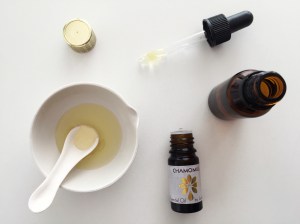
Last week I ran a natural skin care making workshop and the client was suffering from hay fever. It was obvious they would not enjoy the few hours we had together when suffering with congestion in the nose and sinuses, sneezing, eyes watering and itchiness. They did have anti histamines, but I suggested we make a chamomile essential oil blend first to apply around the eye and nose area to see if it would ease the symptoms.

Chamomile essential oil is very potent, so you just need a tiny amount, we used 1 drop of oil in 5ml of carrier oil (e.g. apricot oil) and applied around the eyes, across the nose and cheeks. We continued the workshop and the symptoms eased in a few minutes, leaving behind just a little sniffing for the rest of the morning and there was no need to use the anti histamines which often have other unwanted side effects (fatigue, dry mouth). It was a great confirmation to observe for my self how the chamomile blend eased and calmed the allergies swiftly and effectively.

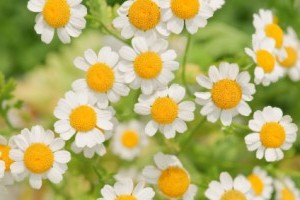
Chamomile is great for calming allergic reactions, such as rashes, inflammation and hay fever, it also calms the nervous system which is useful because when suffering from the symptoms it can make your mood quite irritable, aggravated and upset.

Caution: You must blend the chamomile essential oil with a carrier oil before applying to your skin, you can use any of the Carrier Oils listed for sale in my shop or simply use a little olive oil from your kitchen cupboard.

Click here to order a Bespoke Chamomile Blend to help with hay fever and other allergies. Click here to buy Chamomile Essential Oil.

You may also like to read: Lavender and Chamomile for Hay fever

TESTIMONIAL:My hay fever symptoms have improved a lot thank you. I still get itchy eyes and a little blocked and sneezing but thats usually in the mornings or evening when I need to re-apply the blend.
Your bespoke blend is really beautiful to apply thank you. I think in the first few days as my symptoms were so strong I applied quite a lot and then felt a bit greasy as I’m not used to using oils (I’m also quite heavy handed sometimes with things). I am now applying less (3 drops to my face and neck, twice a day unless I need during the day) and it’s working really well thank you. It’s so nice not to be taking medication, which I always avoid if I can.
I have also had dry patches of skin across my cheek bones for months despite applying moisturiser daily and they are now beautifully soft! ‘ Michelle Foulser

How to Take Care of your Clothes with Essential Oils.

A change of season means a change of wardrobe, what ever side of the planet you’re on you are bound to be experiencing the change in seasons, whether it’s time to pack away your warm jumpers and winter coats or say goodbye to summer dresses and cool T-shirts, essential oils are a sweet smelling and practical way to look after your clothes.

IMG_5390

If you’ve ever experienced an attack of moths on your favourite cashmere jumper then you will be sure to take extra care when you store your knitwear and silks away for several months. Here are a few tips to help protect your clothes and ensure they reappear in one piece, smelling fresh when you unpack next Spring/Autumn…

It’s advisable to give everything a wash before you pack them up and as a side note, if you haven’t worn them all season, consider getting rid of them, there are so many benefits to de-cluttering your wardrobe! I add a few drops of lavender essential oil to my washing powder for a little touch of freshness and since lavender oil deters moths it is a great smelling start to the process.

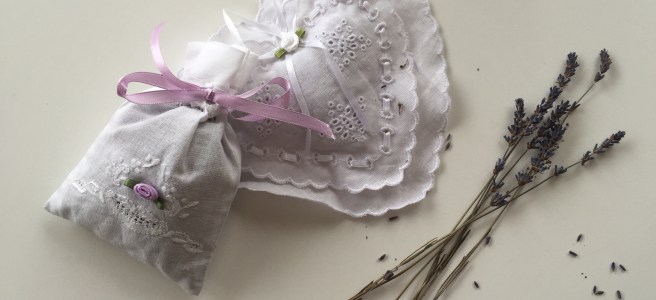
I then take several lavender filled bags or pillows that contain dried lavender flowers, if the scent has faded I add a few drops of lavender oil to freshen them up. I also sprinkle a few drops of cedar wood essential oil as this is another oil that deters moths, (cedar wood oil is dark brown in colour, so you may want to avoid staining the material on the lavender bags, in that case just add a few drops to tissues). Tuck the lavender bags evenly among the clothes in their suitcase or storage bag and close securely.

I don’t think anyone likes the smell of mothballs and even if you’ve never had moths this is still a worthwhile ritual as it keeps your clothes fresh and smelling lovely when you bring them out next season…

If you don’t have any lavender bags you can sprinkle the oils onto tissues and place them in the storage bags. Alternatively, you can purchase some from Mayfield Lavender.

These ones are way too pretty for me to pack away so I generally keep them in my draws, with my bed linen or on hangers in my wardrobe so I can appreciate them daily.

Since lavender has so many other amazing properties including supporting a restful night sleep, I also hang a lavender bag on my bedpost, or under my pillow so that I breathe in the scent as I lay down to sleep.

Click here to read more on how to use lavender oil to support sleep and how to scent your car naturally.

For tips on de-cluttering your life check out Lightly Love.

Lav bags group 1 small

How to use Essential Oils from Trees to Support our Respiratory System and in Skin Care.

One of the many things I love about essential oils is how the effect on our body is connected to the plant itself and that plants action in life. Trees produce oxygen by their mode of respiration which supports us with our respiration, so, it seems natural for the essential oil from trees to support conditions that affect our respiratory system, like colds and coughs. When you breath in essential oils you can feel it in your body immediately, and this is particularly prominent with tree oils such as eucalyptus and pine. You can feel them cleaning and clearing as they pass from the tip of your nose deep down into your lungs. I feel my chest expand, even my posture changes and I will naturally be more open and stand taller – just like a tree.

Eucalyptus trees.

Everything is connected so it goes beyond the respiratory system, but it’s a good example of feeling for yourself in your body, how the oils can support.

Frankincense & myrrh have a less fierce action on the respiratory system, much more calming, helping to bring a gentleness back to your breath. They are a great support for conditions such as asthma, panic attacks, stress, anxiety and for use in meditation.

Click here for links to free gentle breath meditation audios, they are quick, simple and a very practical support for real life.

Meditation_A-B0014-000481-CL-LR
Image care of Unimed Living

Frankincense is a great oil to scent the room with when you’re taking a moment to breath gently. Myrrh has a much subtler smell so is not so prominent in a burner, it’s quite sticky too so may be best avoided in diffusers incase it damages. I prefer to massage this into my wrists to support connection with myself. Click here to read my blog on using myrrh in this way.

Frankincense and myrrh are also examples of how essential oils can act on our bodies in the same way they do so as a tree in life. The essential oil comes from the resin that is produced by the tree when the bark is cut or injured. The resin is a sticky, thick, goo that covers the affected area and then hardens to seal and protect the damaged site, it’s a bit like the way humans bleed and form a scab to protect their bodies when the skin is broken.

Frankincense resin.

Can you see why frankincense and myrrh are used in skin care? The resin is healing the tree and the oil that is produced from the resin is used for it’s healing properties on our skin. Frankincense is one of the most popular ingredients in many skin care products. Myrrh is particularly affective in helping festering and difficult to heal wounds, especially in the mouth -it’s useful for mouth ulcers and popular in oral care for this reason (see my blog on gargling with myrrh for more details).  I also like to use myrrh on dry, hard, cracked skin, it’s the base of my blend for scars and usually appears in the skin care products I make -it has recently been working wonders for a client with bed sores.

Benzoin is similar to frankincense and myrrh, it is a tree that produces a resin that is made into an essential oil. It is very protective to the skin but has a very pleasing vanilla like scent that makes it particularly comforting to use for stress and anxiousness as well as in skin care.

I find that even the character of trees confirms how they work on the body. Large, tall strong trees like pines and firs and huge eucalyptus trees with tonnes of leaves are very expansive to the respiratory system, powerfully cleansing and clearing. Whereas the more delicate small trees like frankincense and myrrh work in a gentler way, supporting reconnecting when you feel out of sorts. Both are very powerful but different in action, a reflection of ourselves as humans; we all have different strengths and qualities that offer support in different ways.

Boswellia carteri tree
Boswellia carteri – the tree that produces frankincense essential oil from its resin.

You could not compare the delicacy of a flower that may last a few days or weeks to the strength of a huge oak that could live for generations. One is not better than another, for each brings a natural beauty that is needed. In this same way, we can appreciate each other for our natural qualities, we all have something to bring to this world of value and it is a true gift for humanity when we share ourselves in full.

Yarrow Essential Oil and How to make a Balm

FullSizeRender-32

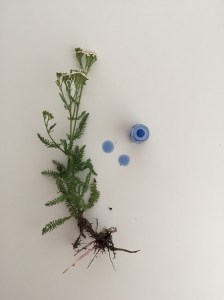
Many people are unaware that yarrow, Achillea millifolium, a common plant growing abundantly in British country side, actually produces a very powerful, useful and rather beautiful essential oil.

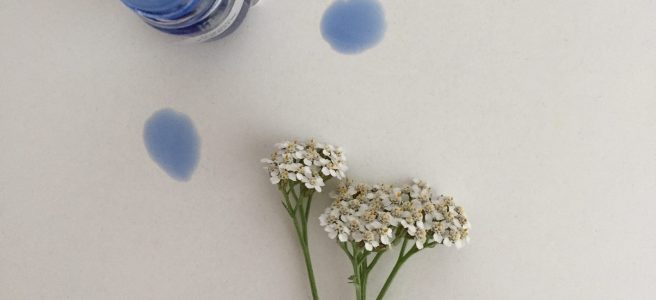
It’s an oil that stands out when you see its striking, ink blue colour, which is very unusual for an essential oil. The plant itself is made up of an umbrella of little white flowers, sometimes pink, but during the production of the essential oil a chemical called chamazulene is produced during steam distillation which gives yarrow essential oils its bright blue colour.

Most essential oils come in tinted glass bottles as they are sensitive to light, so it’s rare to see such amazing colours as in the below photo.

IMG_2100
Bright blue yarrow essential oil.

Chamazulene is also the particular component that makes yarrow so useful as it is anti-inflammatory in effect and therefore useful for any condition where inflammation is present, for example:

  • arthritis,
  • allergies,
  • bumps & bruises,
  • breaks,
  • gout,
  • skin rashes,
  • strains & sprains.

Even conditions such as period pain and back ache can be helped by using yarrow because of the presence of inflammation.

Yarrow & Lavender Balm Recipe – for pain and inflammation.

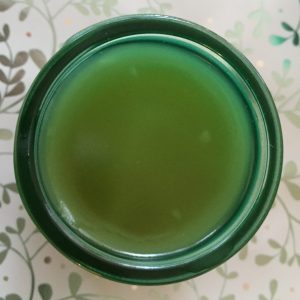
A balm is a very practical method of application for areas of inflammation. I would recommend applying this simple balm, made with yarrow and lavender essential oil, twice daily. Massage in very gentle anti-clockwise circles to the affected area, if the area is too tender to touch, or is an open wound then apply the balm as close to the site as is comfortable.

IMG_2184

Ingredients ~ to make 100 ml pot:

  • 10g beeswax
  • 10g shea butter
  • 80g or ml of base oil, e.g. Olive oil or Almond oil
  • yarrow essential oil – 40 drops (2ml)
  • lavender essential oil – 60 drops (3ml)
  • vitamin E (optional)

Caution ~ yarrow can contain a varying amount of camphor in it, which means it is advisable to avoid with epilepsy, in pregnancy, and could cause sensitisation in ragweed allergy sufferers.

See my blog on ‘How to make a Massage or Body Balm’ for full recipe instructions.

Blue chamomile essential oil, Matricaria recutita (also known as German chamomile) also appears blue in colour, it contains the same anti-inflammatory agent chamazulene and would be suitable for all of the above inflammatory conditions. Click here to purchase this essential oil.

See my blog on Lavender & Chamomile for Hay fever for more details.

How to use Cooling Peppermint Essential Oil for Sun Burn and After Sun Care.

sun burn treatment after sun gelI once had a peppermint bath, ‘once’ being the appropriate word here: it was at a friends house and there was a bottle of bubble bath in her bathroom that had peppermint essential oil listed as an ingredient, happy to have found an essential oil bubble bath, I poured some in and lay down into the bubbles. A very strange sensation then came over me. My skin was cool and tingling, even though the water was hot. It felt really weird, a bit unpleasant and I haven’t used peppermint essential oil in a bath blend since.

However, this cooling effect of peppermint essential oil is extremely useful in many other circumstances, it’s refreshing in tooth pastes, and tingling in lip balms but it really stands out as an effective ingredient in aftersun lotion and for treating sun burn.

This is a simple recipe for a very effective, cooling gel for sun burn. It is blended with lavender, which is very effective for treating serious burns and pain relieving (it is actually used in hospital burns units), as well as German chamomile which has a powerful anti-inflammatory action. These three essential oils blended in a base of aloe vera gel which is hydrating, soothing & helps heal wounds, make for a powerful treatment for sunburn.

After Sun & Sun Burn Gel (2.5% blend strength)

peppermint essential oil for sun burn and after sun

Ingredients:

50ml aloe vera gel

5 drops peppermint essential oil*

15 drops lavender essential oil

5 drops German/blue chamomile essential oil – you can leave this out if it’s just for after-sun, and replace it with Roman chamomile essential oil which is more gentle, the scent is more pleasing and less intense.

Instructions: mix them all together and apply to the affected area.

Cooling Foot Gel

That cooling sensation is also really welcome for tired & weary feet,  you can use the same recipe above as a cooling foot gel.

Refreshing Shower Gel

For a cool, refreshing shower, just add a few drops of peppermint essential oil to your shower gel – see my blog: Blending everyday products with Essential Oils for how many drops to use.

It’s also a great digestive essential oil but I will talk about that in another post… in the mean time enjoy the cooling effects of peppermint oil.

*Caution ~ Do not use peppermint essential oil if you have cardiac fibrillation. Maximum blend strength 3%. Avoid use with babies.

You may also like to read A Pot of Fresh Mint Tea with the benefits of Essential Oils and Soothing Chamomile for Skin Conditions.

How to use Essential Oils on Holiday

essential oils on holidayInspired by the sprinkling of sunshine over the UK this week, it’s time to share some summertime essential oils, essential for taking on holiday.

Essential oils come in very small bottles so they are a practical addition to your luggage, even if you’re only taking cabin bags. However, it’s still worth considering which are the most useful ones to take with you, so this blog is to help you weedle it down to just a few essentials that will come in most handy.

The main issues or symptoms that are commonly experienced when travelling are: around the journey itself; skin care; insects and first aid, so here I have listed some specific symptoms, some appropriate essential oils and simple, practical ways to use them.

essential oils on holiday

TRAVEL

Travel sickness -cardamom, spearmint, chamomile (roman*)

Jetlag – peppermint, lavender

Anxiety (fear of flying) – neroli, lavender

How to use – make a blend in a ‘rolette’ bottle (see how below) to roll across your wrists and tummy, or sprinkle a couple of drops on a tissue to keep in a pocket or in your bag and gently breathe in as a preventative measure or at the time of feeling the symptoms.

SKIN CARE

After sun skin care – lavender, palmarosa, chamomile (roman*)

Sun burn – lavender, chamomile (german/blue*), peppermint

How to use – blend in a base of aloe vera gel or add to your aftersun lotion, see my previous blog for Blending every day products – how many drops should I use?

INSECTS

Insect repellent – lemongrass, citronella, geranium, lavender or tea tree -use one or a combination of those you like the most.

How to use – blend in a base of aloe vera gel, add to your aftersun lotion, (see my previous blog for How many drops should I use?) or make a blend in a rolette bottle (see how below). Some of these essential oils combined would double as a perfume – I like geranium, lavender & lemongrass.

Insect bites – chamomile (german/blue*), lavender

How to use – apply directly to the affected area or as a blend in a ‘rolette’ bottle (see how below).

FIRST AID – Lavender

If you only take one essential oil on holiday make it lavender, it’s the most useful essential oil for most minor first aid situations.

It’s antiseptic, anti microbial & cleansing so ideal for first aid, it is particularly effective on burns, so great for skin care and after sun, it’s ‘insecticidal’ so will deter insects and is very relaxing and calming so it helps with easing travel sickness and tension.

It’s also nice to sprinkle a little in hotel rooms if they don’t smell lovely, especially on the pillow.

For more details on how to use lavender essential oil, see my previous blog on ‘Lavender, Essential First Aid’ .

rolette bottle

Rolette Bottles – here’s how to prepare a rolette bottle:

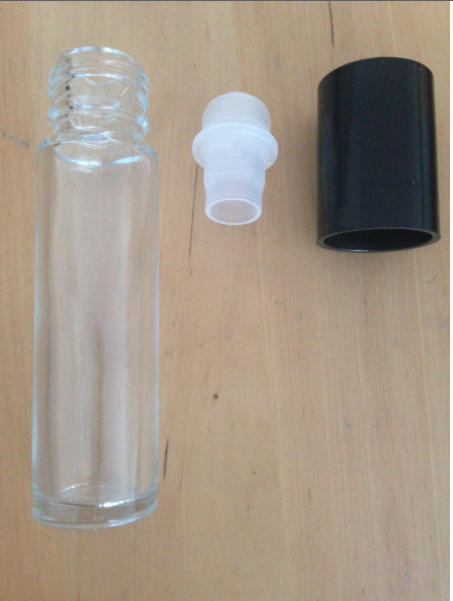
Using a ‘rolette’ bottle (as pictured) is very practical as you can keep it in a pocket or handbag and it is easy to use. It comprises of a small glass bottle (10 or 15ml), a roller ball top (that releases a little oil across the skin when you pass it over), and a cap.

Instructions

Fill the bottle with a base oil eg. olive oil, then drop appropriate essential oils directly into the bottle, if you have a 10ml bottle, then you will need between 2 and 10 drops of essential oil, see my previous blog for more details on How many drops should I use? Fix the roller ball cap and lid and give it a shake to disperse the oils evenly.  Make a label for the bottle so you don’t forget what it contains.

chamomile & blends

Holiday tip: Rather than take bottles of essential oils you could prepare the blends that you are likely to need in rolette bottles and take these with you instead.

* Chamomile roman or blue/german – There are two types of chamomile essential oil: roman chamomile is more gentle, and german/blue chamomile, which is deep blue in colour, is more powerfully anti-inflammatory in action. I have recommended the german/blue chamomile for sunburn and insect bites, but the roman chamomile is also suitable in each instance.

Click here to order bespoke blends of essential oils ready made for your holiday requirements.

Travel Tips: here’s a blog to help you in general with how to pack your suitcase: ‘Travel Suitcase – What to Pack?