How to make Fresh Mint Tea and Appreciate the Benefits of Essential Oils

I recently ran a workshop and used a mint plant to illustrate what essential oils are and where they come from.  In the case of peppermint the essential oil is held in the leaves of the plant, and literally brushing your hand over the leaves is enough to release the essential oil, which in turn releases the scent.  Peppermint is a great oil that really supports digestion and sometimes just the initial smell from the plant can stimulate our appetite, make our mouth water and our tummy rumble as our body releases various digestive enzymes in preparation for eating.

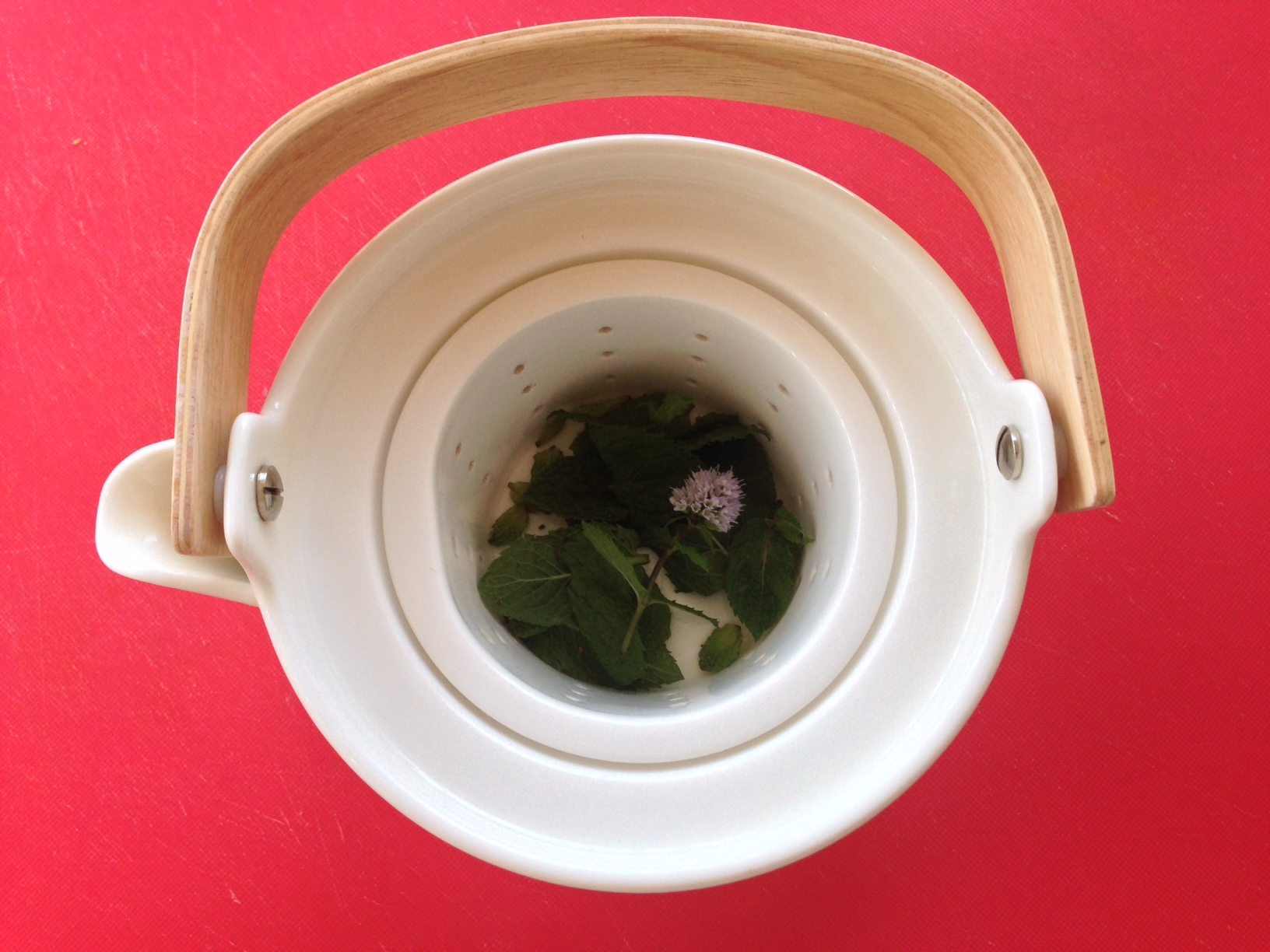
Fresh Mint Tea – a cup of mint tea is a great way to use peppermint regularly to support your digestion.  Dried herbs which are usually used in herbal tea bags will contain a very small amount of essential oil which is why they don’t smell as strong as when fresh. So making a pot of mint tea using the fresh leaves from the plant will ensure you experience more of the benefits of the essential oils.
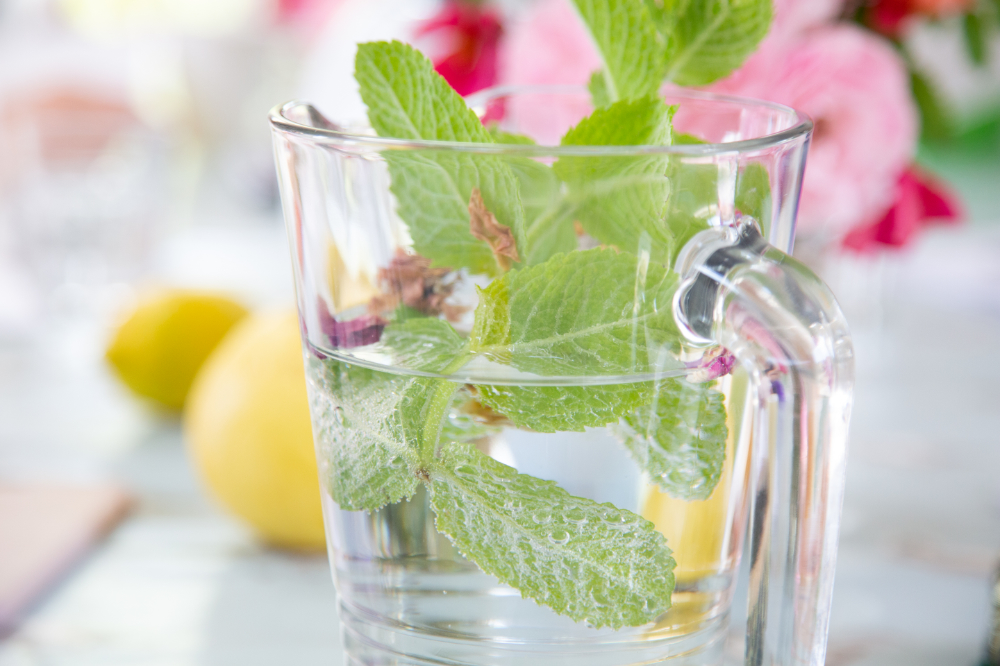
If you don’t happen to have a mint plant in your garden or close by to harvest from, you can buy a bag of fresh mint from most supermarkets, or a pot from a garden centre would be handy for regular use. All you need to do is pluck a few leaves from the stems, give them a rinse and pop them into a tea pot. I like mine strong so I usually use around 10-20 leaves, then add boiling water and let it brew for at least 5 minutes.  It’s very refreshing, and I’m sure you will appreciate the difference compared with using a peppermint tea bag -I’m really not a fan of tea bags, but if it’s all you can get hold of, it’s still worth making it in a tea pot, because the boiling water releases the essential oils from the plant material in the steam, and once you have the lid on the tea pot you capture the precious oils to enjoy more fully when you pour.  It also feels much more nurturing to have made a pot, I like the ritual of making the tea, taking the time to let it brew, choosing the cup, and I love drinking it when the temperature is just perfect.

When I go out to a restaurant or café, I often ask for a fresh mint tea at the end of the meal, as it supports digestion.  Even if they don’t advertise it on the menu, they will usually have some fresh mint in the kitchen and are usually willing to make up a pot for me -so much nicer than a tea bag.

The essential oil is much more potent than the leaves of the plant, so if you want a more powerful effect to support more serious digestive complaints you can actually buy capsules that contain peppermint essential oil in, which can be very effective.  Peppermint tea will still be very supportive for conditions such as constipation, IBS, bloating, indigestion. You may also like to read my blog on digestive massage for these symptoms.

Lemongrass tea by Spice & Smile

Some other delicious teas to support you… Lemongrass Tea – for a lovely, light, slightly sweet tea, try this recipe for lemongrass tea by Thaïs from her beautiful blog Spice & Smile , again you will be benefiting from the lemongrass essential oils in this and it’s a great one to help with bloating.

Lavender or Chamomile tea – to support winding down in the evenings you can make a fresh floral tea with flowers from lavender and chamomile plants as they are all soothing and calming in effect. Lavender can be a bit bitter, so I prefer to mix it with something like mint or liquorice.
Rose petal tea – a few rose petals mixed with a fresh mint tea is a particularly good combination, a couple of rose buds is enough to compliment the mint, or half a tea spoon of petals. Make sure the rose petals or buds are suitable for consumption and for use in tea. You can purchase the roses and other herbs for use in tea from Fiona Pierce at www.loveinacup.co.uk

For some gorgeous inspiration on cleaning your tea pot & making yourself shine, read this beautiful blog: Aladdin’s Lamp – Cleaning a Tea Pot.

CAUTION: Do not ever put drops of peppermint essential oil (or any other essential oil) into a glass of water and drink it! This is extremely dangerous practice that is advised by unprofessional or untrained persons.  Essential oils, in their undiluted form are highly concentrated and by nature hydrophobic, meaning they do not mix with water, therefore the very delicate lining of your digestive system is exposed to the concentrated peppermint essential oil. Even if there are no immediate problems, it can be causing issues that become apparent after time.

How to Use Lavender Essential Oil to Help Sleep Problems

Lavender essential oil is often used to help with sleep problems, it has a very clearing effect in general which is useful as quite often people struggle to sleep because they are stressed, tense or their mind is racing, and lavender can help to clear and ease these symptoms.

There are some great ways to use lavender as part of a wind down routine before bed, to support the body in preparing for a restful night.

  • You could simply use lavender oil in a burner to scent your bedroom before you get into bed;
  • taking a bath with lavender oil in the evening is a great way to really relax your body and let go of any tension held from your day;
  • it can be as simple as sprinkling a few drops of essential oil onto your pillow at night or on a tissue placed under your pillow.

It’s more about the way you do it, rather than what you actually do -so having a bath isn’t going to be better than a drop on your pillow, it’s all about the quality.  The preparation for bedtime before your head hits the pillow, will support the body greatly, compared to an evening of distraction (TV, computer, etc.), and waiting until you feel really tired and then getting into bed and hoping you’ll sleep because you’re so dog tired.

Bringing lavender into your evening rhythm can be much more effective at easing the stress of the day, and a busy mind.  It’s worth experimenting to see how you like to use it:

  • it maybe that you use it in a face cream that you apply in the evening and this is the way you really love to use it,
  • or you might have a lavender bag that you hang by your bed, and you sprinkle a drop on each night so you can enjoy the scent.

It’s important that it is something for you, rather than something you ‘do’ to try and make you sleep ‘better’… if you’re intention becomes about supporting yourself, rather than to fix the sleeping issue, it can be so much more effective, especially in the long term.

Lavender Scented Bedding

The cleansing action of lavender makes it very appropriate to use in washing powder and fabric conditioner.  Just add a few drops (5-10) of lavender essential oil with the fabric conditioner to the washing machine (you can also add it to the washing powder/liquid if you prefer) and your wash will come out smelling heavenly.  It’s such a simple touch but actually brings plenty of health benefits as well as the lovely smell, because lavender essential oil has an anti-microbial action, your lovely smelling bed sheets and clothes will also be fighting off germs as you wear them.

You could also add lavender floral water into the iron rather than just water when ironing bed sheets, this is such a treat when you get into bed and your whole body feels lovely under the sheets. Make sure you don’t use the essential oil in the ironing water, as the oil may leave a stain on your clothes. Floral water has had the essential oil filtered out so it won’t leave any marks.

Make sure you use a good quality essential oil and not just a perfumed synthetic oil.  You can still enjoy benefits and effects from the perfumed smell, but a good quality essential oil will be more beneficial, (a synthetic version will not have anti-bacterial properties) and the natural scent will probably smell much nicer.

Click here to buy Lavender Essential Oil.

For more uses for lavender essential oil see Lavender, Essential First Aid.

How to Use Essential Oils in Hand and Nail Care

How to take care of your hands and nails with essential oils and carrier oils and make your own nurturing nail oil.

Click to Shop Custom Nail Care Blend.

Using vegetable oils and essential oils can be very nourishing and support healthy nails.  I always cut my nails down to the absolute minimum since I had had eczema in the past and wanted to avoid scratch damage, it was also recommended to keep them short when I was studying massage. So, when a friend mentioned how much more delicate you naturally became with longer nails, I decided to experiment and grow my nails a little.  I became much more aware when using my fingers in various ways, for example, shutting doors, lifting things, opening cans etc., and I became more delicate in the way I did these things, which really felt gorgeous.  If I was rough with my hands then it would be more obvious and show me I wasn’t being so delicate, I flipped my nails back a few times which really stopped me in my tracks.

Divinities Touch by Kelly Basford

Nail oil

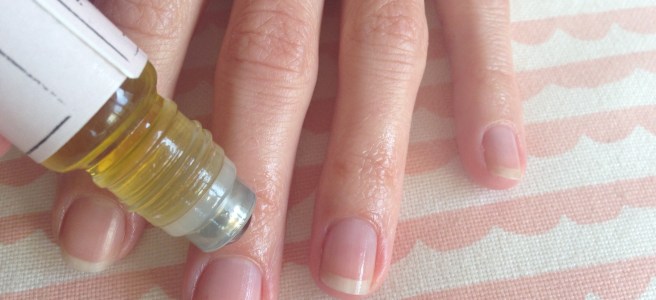
Designed to massage around the nails and on the skin just before the nails begin to grow. Applying it to this area supports healthy nail growth, as this is where the new nail is being formed.

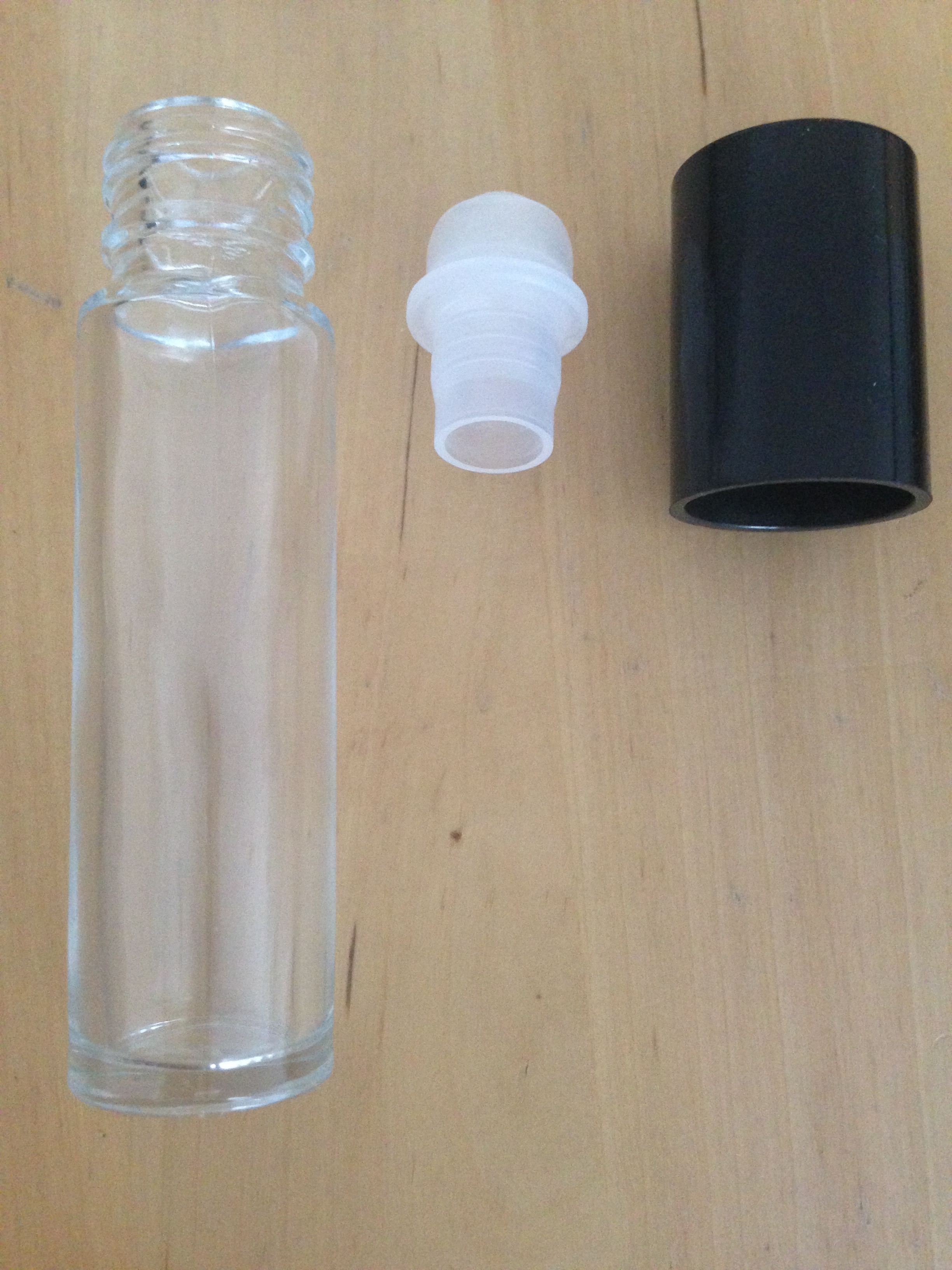
It is very simple to make your own and I use a ‘roller’ bottle to dispense the oil.  It comprises of a small glass bottle, a roller ball top (that releases a little oil across the skin when you pass it over), and a cap.

rolette parts

They usually come in 10ml bottles, and the recipe below is for a 2.5% blend strength, but you can adjust the recipe if needed using the charts on my previous blog post ‘How many drops should I use?’:

Ingredients

*If you can’t use nut oils due to allergies then I would suggest using organic apricot oil and or argan oil instead.

Nail Care Blend by Kelly Basford

Instructions

Measure the quantities of base oil (macadamia and almond) and pour directly into the bottle, then drop essential oils directly into the bottle, fix the roller ball cap and lid and give it a shake to disperse the oils evenly.  Myrrh is quite thick and gloopy, so you may see the drop of oil sink to the bottom, so you will need to shake it well to ensure it has mixed through. Roll the oil just under the nails each day, and enjoy. Ensure you put a label on the bottle so you don’t forget what it contains.

Ingredients to make your own nail oil blend are available to order from my webshop or Click here if you would like to order a ready made nurturing nail oil blend.


How to Take Care of your Hands with Essential Oils

Be delicate, tender and gentle with your hands.

A few years ago I noticed my hands getting a little bit cracked and battered, I have very sensitive and soft skin and it was starting to split around the finger tips from all the bottling and pouring I do at work.  I had experienced this on and off before, but this time I was a little more conscious that it was showing me I hadn’t been taking care of them.  I had stopped using moisturisers on my hands years earlier, as it is an area I’m prone to getting eczema on, and many contain perfume, alcohol and other potential irritants.  But, now they were shouting out for some nourishment, so I made up some simple moisturising creams and ensured there was one in my bathroom, and one at work, so each time I washed my hands throughout the day I gave my hands a little love. I was absolutely amazed that within 2 days, my hands had literally transformed, completely soft and smooth again.  Such a simple addition to my daily routine and of course the action of massaging a lovely cream with essential oils in was another nurturing moment in my day. It was only a short moment after a trip to the bathroom or washing up so it certainly wasn’t taking up a lot of time in my day, but the difference made a huge impact on my day and the way I look after my hands, especially the way I do things with my hands, like unscrew caps, and shut doors, I generally just want to be more careful and gentle with them.

Here are a few blends that I particularly like for the hands; I have specified the number of drops for adding to 100ml container of cream, if you have very sensitive skin then half the amount of drops.

Protective and soothing blend, so great for sensitive skins.

Benzoin 10 drops, mandarin 20 drops and roman chamomile* 6 drops – * avoid with allergies to the daisy family.

Deeply nourishing blend, so perfect for very dry, cracked hands in need of some serious care.

Myrrh 16 drops, palmarosa 10 drops and rose 8 drops

Cleansing and anti-microbial blend, great for really mucky hands.

Lemon 10 drops, lavender 20 drops and rosemary 5 drops

For various sized pots of cream you can refer to the following blog post link to see how many drops you should use: Blending Instructions

Shea butter – for extremely dry cracked hands or hands that are constantly under pressure, you could try using just shea butter. It’s quite thick, so will need warming to soften and spread over the skin, but it has a very nourishing and protective quality. I recommend it to clients that are working consistently with their hands for protection, for example gardeners.

Make your own balm to support and care of your hands, click here for balm recipes.

Make your own natural hand cream using my recipe in the following blog post from my Cream Making Workshop:

I love playing around with different creams and flavours but even choosing a cream you fancy from the supermarket will make all the difference to your lovely, well used, hands and fingers.

Top tips for taking care of your hands:

ALWAYS use washing up gloves when washing up, even if it’s just one cup or spoon, as putting your hands in and out of water especially with washing up liquid in can dry them out! My favourites are from the brand Bizzybee and the ‘luxury household’ type feel absolutely gorgeous inside, it is a real treat putting my hands in them.

Why is gentleness important? photo care of Unimed Living

ALWAYS use gardening gloves when gardening.

ALWAYS be delicate, tender & gentle with your hands.

Click here to read more on how to take care of your nails with nourishing carrier oils and essential oils.

For more support read a beautiful article that helps us recognise what gentleness feels like in our body and asks Why is Gentleness Important?

How to use Lavender and Chamomile Essential Oils for Hay fever

white lavender
I had a lovely email from a friend last week who was inspired by a previous blog (‘Lavender, Essential First Aid) to use lavender essential oil when suffering symptoms of hay fever.  I asked if I could post it here since it was so timely for me, as I’m sure it will be for others, so thank you Catherine Jones for sharing your experience.
‘I felt to share how lavender oil is helping me right now, as it has taken me by surprise.  I have hay fever, and so have very itchy eyes, an itchy & runny nose, and my face is generally congested and reactive all over. I don’t have any drugs yet, and last night I felt to try dabbing some cool wet cotton wool on my eyes to calm them down. I added a drop or so of lavender oil, and it made such a difference. I used it a few hours ago, pretty much all over my face, but paying attention to the area around my eyes, and across my cheeks, and down the gall bladder lines from nose to chin. It was amazing. I often use lavender in things, but it had never occurred to me that it might ease an allergy. Right now I am not sneezing, nor itching, and I am breathing freely. ‘
Chamomile
Her message inspired me, as I was experiencing similar symptoms at the time, and I have since tried the same technique using roman chamomile essential oil, as it is specifically good for allergies and particulary soothing and calming.  For more details on chamomile essential oil see ‘Soothing Chamomile for Skin Conditions’.

How to Blend Essential Oils – How Many Drops Should I Use?

Essential Oil Blend Strength Chart – how many drops of essential oil to use when blending.

Use this chart to help you decide how many drops of essential oil to add to a base.

  • Up to a 1% blend strength – for use on the face, delicate and sensitive skin.
  • Up to 2.5% blend strength – for general use on the body
  • Up to 5% blend strength – for perfume making or when you are treating a specific area eg. a balm for chest infection or arthritic knee.

Screenshot 2017-07-28 13.08.18

Inspiration: A simple and creative way to bring essential oils into your everyday life is to add them to daily house hold products.  Something like a shower gel, or face cream would be ideal or even fabric conditioner. Choose something fragrance free or with a natural or mild perfume, otherwise the essential oils you choose may not be noticeable above the fragrance already present or if essential oils are already in the ingredients, adding more could increase the ratio to more than is safe.

Once you have your chosen base, add some of your favourite essential oils to the product and mix them in (see below for inspiration or click here to choose from the range of essential oils). It’s important to know how much essential oil to use because they can irritate the skin if not diluted appropriately.

I have put together 2 charts to help you with this (and a more comprehensive one at the beginning of the article for when you feel more confident), the first is for general use (which gives a 2% blend strength), and the second for any products being used on sensitive skin, or more delicate skin such as very young or aged skin (which gives a 1% blend strength).

2% General blend strength
Amount of base product No. of drops of essential oil to add
10ml 4
30ml 12
50ml 20
100ml 40
1% Delicate blend strength
Amount of base product No. of drops of essential oil to add
10ml 2
30ml 6
50ml 10
100ml 20

How to mix essential oils into your chosen products:

Sometimes it’s easy enough to remove the cap, add the appropriate number of drops to the bottle and give it a shake to disperse the oils evenly.  I often use a chopstick to stir in essential oils to a pot of cream.  If you have something very thick in a container that you can’t stir through, you may need to pour the product into a mixing jug first to blend the essential oils thoroughly, and then pour back into the original container -a funnel is particularly useful here.  You may also notice that the product becomes a little thinner when the essential oils have been added -this is normal.

Every day body care products and household products you can add essential oils to:

These are some every day products you can easily enhance with a few drops of essential oil, and some suggestions that would work well with their intended use -make sure the original product is fragrance free (organic, natural and children’s products are often more gently scented):

  • Shampoo ~ Rosemary and orange (for dark or thin hair), or chamomile and lemon (for fair hair)
  • Conditioner ~ Rosemary and orange (for dark or thin hair), or chamomile and lemon (for fair hair), benzoin and orange (for all hair types)
  • Shower Gel ~ Lemon and lavender (detoxifying & cleansing), eucalyptus and peppermint (clearing and invigorating).
  • Bubble Bath ~ Lavender and mandarin (cleansing & calming), roman chamomile and neroli (soothing and very calming).
  • Hand soap ~Lavender (cleansing) or rose (nurturing).
  • Face cream ~ Rose and frankincense (for dry, mature skin) or chamomile and neroli (soothing and gentle for sensitive skin).
  • Body cream ~ Benzoin and mandarin (protective and nourishing), geranium and rose (balancing and nurturing).
  • Washing Up Liquid ~ Lavender (cleansing) or basil and lime (fresh and zingy).
  • General Surface Cleaner ~ Lemon or citronella (detoxifying).
  • Bathroom Cleaner ~ Lemon, peppermint, eucalyptus and/or thyme (detoxifying and powerfully anti-microbial).
  • Laundry Liquid ~Lavender (cleansing) and lemon (detoxifying).
  • Fabric Conditioner ~ Lavender (cleansing) or geranium and orange (balancing).

Caution: Because many of these products are usually already fragranced, I would recommend you choose a fragrance free version, or something with a very gentle scent that you can enhance with additional essential oils.   A brand called Urtekram do a perfume free range that would be suitable.  Children and baby products are often fragrance free, and can be gentler with less aggressive ingredients, although this is not always the case.  Organic and sensitive skin ranges may also be fragrance free.

Tip: If I have any essential oils that are past their best then instead of throwing them away I use them in cleaning products around the house.

How To Use Lavender Essential Oil

I’ve been feeling a bit under the weather just recently, and decided to write this post after realising I had used lavender essential oil three times for supporting myself when feeling unwell in one morning.  When I’m run down, my glands generally start swelling up, I get achy and tired and sometimes a headache.  On this morning I applied some lavender oil to my tender glands on my neck, gargled with a drop of lavender oil, to ease my sore throat, and rubbed a little around the top of my neck that was aching a lot.  Later that day when carelessly getting up off the floor and scratching my knuckle with my own fingernail, I applied a drop to the cut as an anti-septic and to help the pain.  Since it was in an awkward place, I then applied a plaster, but put a drop of lavender oil on the padded section first.

I suspect that I’m renowned by my friends and family for saying “you should put some lavender on that” if I happen to see them with a cut, burn or spot, or if they mention an array of other ailments.  Sometimes they will roll their eyes, but sometimes they will try out my advice, and give me positive feedback, along with a little surprise.

Lavender really is the most useful of all essential oils, for one thing it is generally a very safe essential oil to use on your skin, although in the past it has been thought ok to use neat on your skin* I would use lavender essential oil blended in a base oil for all skin applications (5 drops in 10ml base or 2 drops for children & sensitive skin).

Some of the reasons that lavender is helpful in these situations is because it is antiseptic, pain relieving, anti-inflammatory and helps skin to heal. Here is a list of common minor complaints that lavender can be really handy and effective for.  Please note that for anything more than a minor condition, you should see your doctor or seek further professional advice.

  • Athletes Foot – you can either mix 1 drop of lavender into enough skin cream or lotion to massage into your foot. Do this every day until clear.  Alternatively, make up a batch to use in advance so if you have 100ml of cream/lotion add 250 drops of lavender (this is quite strong so only use it for the athlete’s foot).
  • Burns – Lavender is actually used to treat burns in hospitals so it is perfect for burns. After you have held the burn under cold water for 10 minutes you can apply lavender essential oil mixed in aloe vera gel as this will help to heal the skin and reduce scarring. Do not use lavender blended in a base oil initially as you want to avoid any fatty oils while there is still heat in the area.
  • Cuts, Grazes, Scratches -any little nicks to the skin – apply lavender oil to the affected area, as it has a cleansing action and acts as an antiseptic.  If it needs a plaster, you can put a drop of lavender blend on to the soft part that goes over the wound before applying. You could also spay lavender flower water to the area.
  • Ear Ache – roll a small piece of cotton wool up, apply 1 drop of lavender oil, and place just inside your ear, do not push it deep into the ear, and remember to remove it.
  • Fungal nail infections – apply 1 drop of lavender oil blend to the effected nail, ensure that it also covers the skin just below the nail, as this is where the new nail is growing from, and you want to be treating this part too.
  • Hayfever – Click here.
  • Head Ache – apply a drop of lavender oil blend to the temples and gently massage with your fingertips.  If you feel the ache somewhere specific like around the back of the neck or in the centre of your forehead then I would apply the oil and gently massage this area instead.
  • Insect Bites and Stings – apply 1 drop of lavender blend to the affected area.
  • Sleep problems – Click here.
  • Spots – apply a drop of lavender blend after cleansing morning and evening, do not pick or squeeze, you can use cotton wool pads or buds to apply.
  • Thrush/ Candida Genital – for females, put one drop of lavender essential oil blend on a panty pad and attach to underwear as you would during your cycle.  Change it regularly, applying a drop to each new pad.  I have had some great feedback when suggesting this and it is very simple and non-invasive.
  • Thrush/ Candida Oral  – use an egg cup full of water, add 1 drop of lavender blend to it, and gargle with it in your mouth for as long as possible (at least 2 minutes) but do not swallow.  Do this 2 to 4 times a day.
  • Veruccas – apply 1 drop of lavender oil blend to the effected area once or twice a day, using a cotton wool pad or bud.
  • Warts – apply 1 drop of lavender oil blend to the effected area once or twice a day, using a cotton wool pad or bud.
  • Gargling: You can also gargle with lavender blend for the following conditions: Halitosis, Sore throats, Tonsillitis, Gum disease, Ulcers, when losing your voice, and for general oral hygiene (once or twice a day after brushing your teeth). For details on how to gargle with essential oils see my blog on ‘Gargling with Myrrh’.

Lavender essential oil really is an essential addition to your first aid kit!

Note: Tea tree is very similar in action to lavender, so you can use tea tree in place of lavender for any of the above remedies, however my preference is for lavender as the smell is less medicinal and less aggressive.  I would recommend lavender over tea tree in the case of minor burns.

Caution: There are many types of lavender oil on the market, so please make sure you use a good quality product, from a trusted supplier that is actually pure, undiluted lavender essential oil with the botanical or latin name ‘Lavandula angustifolia’.  Some other types of lavender oil may be either too harsh due to different chemistry, or may just be a lavender scented product made from synthetic chemicals, which would not have the healing benefits and may irritate the area instead. Click here to purchase lavender essential oil.

*Click here to read my blog on why you should NOT use Lavender Essential Oil neat on your skin.

How to Use Essential Oils in the Car

I noticed my car smelt a little damp when I got in the other day.  This is not surprising considering the weather in the UK the last few months -which seems like constant rain, and my car is just a little old thing so it doesn’t cut me off from the environment outside.

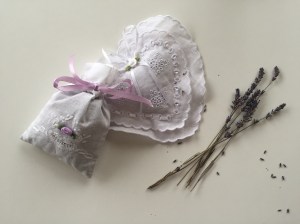
Lavender bag ~ containing lavender flowers which hold essential oil in them to create a beautiful scent.

Anyway, I decided that apart from a clean it needed a little freshening up with some essential oils.  When I first bought the car, I didn’t like the smell, so I chose some strong, fresh, cleansing scents -Eucalyptus, Peppermint and Lemon -because I wanted something to overpower the current smell and to make an impact.  I literally just sprinkled drops of each oil throughout the various surfaces of the car.  The beauty of these oils is that as well as the refreshing aroma, they will have a cleansing and anti-microbial action in the car.  Later on I got a little lavender bag to hang from the mirror, this is a bag filled with lavender flowers which hold essential oil in them and produce a beautiful scent).  When I turn the car enough for the bag to swing, I get a little whiff of lavender from it.

After quite a while I stopped noticing the scent, so I sprinkled some lavender essential oil on to the bag to refresh the smell. Every so often, as the scent fades, I repeat this and will generally choose different essential oils depending on how I feel. I keep a  couple of bottles of essential oil in the glove box and on a long journey I might sprinkle 2 or 3 drops of peppermint or eucalyptus on to the bag, as this will keep me refreshed through the drive.

Caution: Make sure you avoid any essential oils that have a sedating properties as this will obviously not support driving, avoid valerian, carrot seed, clary sage and vetiver. And if lavender essential oil makes you feel sleepy, avoid this too and try lemongrass or thyme.

Using essential oils to freshen the smell of your car is a lovely way to look after you and your environment, and I would say it’s preferable to the usual car trinkets as some of the ingredients I have come across include nasty chemicals.

You can also use lavender bags to freshen and scent your home; I have them in my wardrobe, and various draws and cupboards throughout the house.  Use the same technique of adding drops of essential oil every now and then to freshen them up. For more details read my blog on How to Take Care of your Clothes with Essential Oils.

A Basic Introduction on How to Use Essential Oils Safely

I have learnt far more by experimenting and actually using essential oils myself rather than from books, but there is still a lot of important information to know that will help you understand and get more of a feel for how to use them.

What are essential oils?

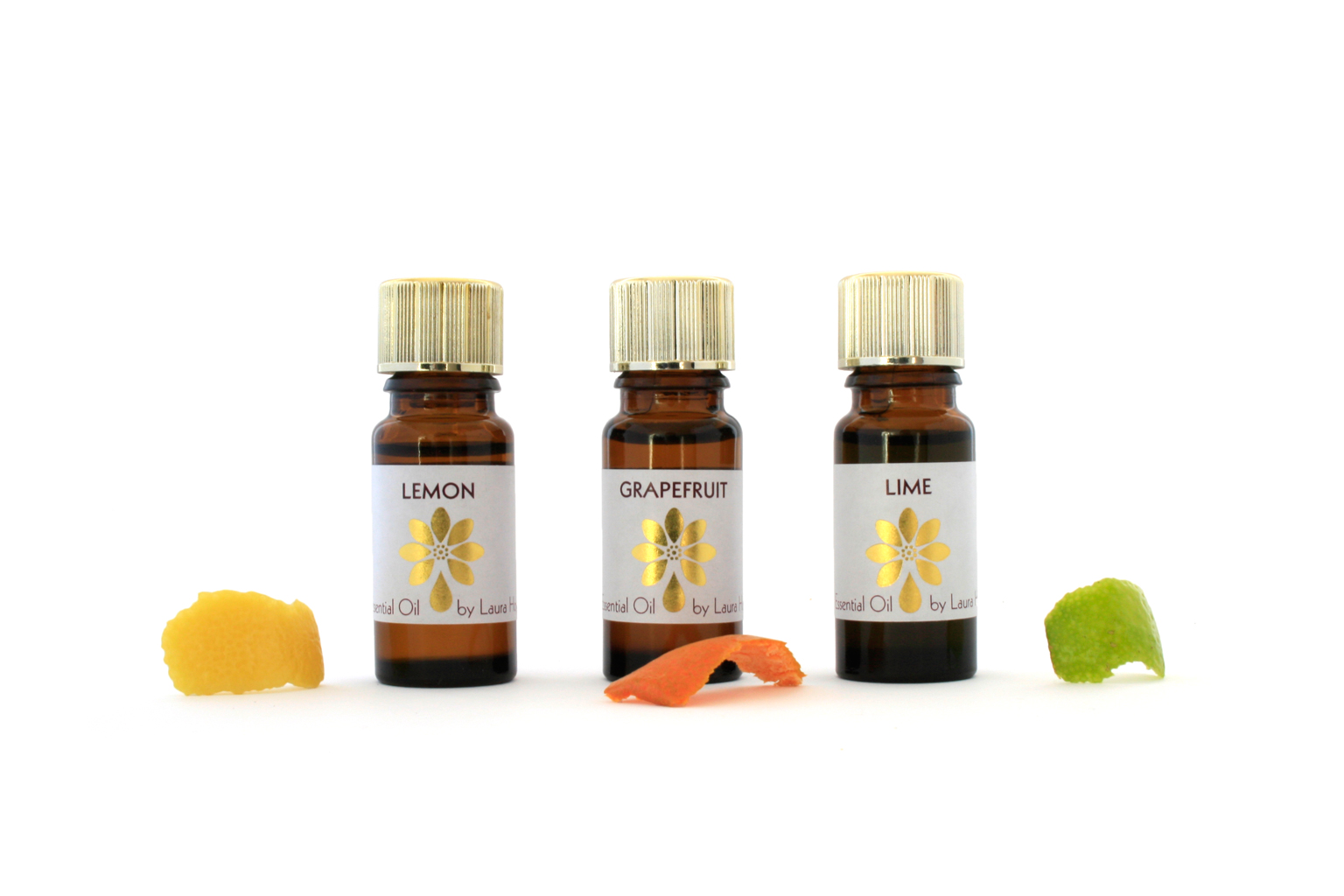
Essential oils are naturally produced by many plants and can be found in their seeds (coriander & fennel), fruits (mandarin & lime), flowers (rose & orange blossom/neroli), leaves (basil & geranium), woods (cedar wood & sandalwood) roots (ginger & angelica) and resin (frankincense & myrrh).  The essential oil is extracted from the plant material, usually by a process called ‘Steam Distillation’ which involves passing steam through the plant material to release and capture the essential oil molecules (more intricate details will appear in a future post).

There is another method, mainly used with citrus oils, called ‘expression’, where the oil is literally just pressed from the peel of the fruit. You can actually release the oil yourself if you dig your finger nail into the peel of an orange or lemon, as you pierce the cells you will be able to see and smell the essential oil.  Make sure you use an ‘un-waxed’ fruit, the waxed kind have been sealed.

Citrus fruit peel yields a lot of oil compared to other parts of plants, but you can probably still imagine that it would take the peel of many oranges to make a little 10ml bottle of Orange Essential Oil.  This should also highlight how concentrated the oil is.  Some plants yield a very tiny amount of oil in comparison, for example, roses.  It takes around 1200 rose flowers (that’s flowers not petals!) to make just 1ml of rose essential oil, which equals around 40 drops of extremely precious oil!  This should go a little way to addressing the high price of rose oil and other delicate floral oils, which generally hold a very small amount of essential oil.

What are the effects of essential oils?

Hopefully, you now have a good sense of the potency of essential oils and perhaps an idea of how powerful their effects can be.  You may be aware of how they are widely used to help us relax, and used as ingredients in bath oils or room sprays and that they are found in many beauty products to help improve our skin, but there are many other ways they can help support us both on a physical level and on the way we feel. The fact that they have such strong scents can have very tangible, immediate effects on our bodies and our moods.  All essential oils I have come across have anti-microbial properties which make them particularly suitable for using to help treat illness and disease, and can have various effects on all systems in the body from the endocrine to the digestive system.

Handmade Ceramic Oil Burner by ‘Throw to Fire’.

How do you use essential oils safely?

Realising the potency of essential oils can also highlight why there are some safety precautions to observe and why it’s important to dilute them when using them on your skin.  In their neat form, they are way too strong for to use directly on the skin and  can cause tingling or burning sensations, and other reactions.  Diluting them in a vegetable oil is ideal as they themselves have many nourishing properties that your skin can also benefit from.  Generally they are full of vitamins and fatty acids that help keep skin healthy and vital.  They also help the essential oils absorb into your skin more easily.  Some other modes for diluting essential oils include honey, milk or aloe vera gel -water based products are not appropriate as the essential oils are hydrophobic (water-hating), and will not mix together.  You do not need to dilute essential oils when using them in a burner, diffusor or for inhalation (all methods to be covered in future posts). See my earlier blog post: Essential Oils in the Shower for details on using essential oils in a burner.

Always dilute essential oils before using them on your skin -including in the bath.

Various modes of application to the skin include:  massage, bath, compresses, skin care preparations such as creams or balms and neat application*.  They can also be used by inhalation (using diffusor, burner, steam inhalation or directly from a tissue) and they can also be used internally. The versatility and range of applications of the oils allows for your own personal input that means they can really support you in your life.  For example you can chose to give yourself a foot bath each night, (with a mix of peppermint essential oil and olive oil) when you get home from work because you have a job where you’re on your feet all day, and that’s what really supports you; or there may be a certain oil that helps calm your breath when feeling stressed or anxious, (e.g. frankincense, lavender or neroli essential oil) and you keep a little bottle in a your hand bag  to dot on a tissue and gently breath in for when you feel to use.  This is what i really love about the oils, that you can bring them into your daily, weekly or monthly routine to support you in so many different ways -all shared throughout this blog!

*Note: It is generally accepted that lavender and tea tree essential oils can be used neat on the skin. See my blog post on Lavender, Essential First Aid, for more details on using lavender or tea tree.