How to make a Massage or Body Balm

A balm is a great way to use essential oils on the skin, it’s simple to make, easy to apply and feels lovely. It can also be used in a variety of ways, I have included recipes for ‘chest’, ‘pain’, ‘cleansing’ and ‘beauty’  balms below but you can tailor the essential oils in the recipe to suit you personally, (see my webshop for tips on essential oil properties and uses for help choosing).

The following recipe makes a good consistency for general use.  It is fairly soft, so ideal for massaging into the skin on your face and body as a nourishing treatment and as a massage balm to lubricate the skin and nourish during massage.

Recipe for a basic Balm – to make 100g  (for 2 x 50ml pots).

  • 10g Beeswax
  • 10g Shea butter
  • 80g or ml of base oil, e.g. Olive oil or Almond oil
  • Essential oil(s) of your choice (up to 2.5ml, see below for inspirations and how many drops to use)
  • Vitamin E, 5 drops (optional)

About the ingredients:

As well giving the balm it’s consistency, beeswax gives a protective and nourishing feel.  Shea butter gives it a creamy smoothness. And then there are the base oils, I usually use almond, apricot or olive oil, which all give it a lovely nourishing feel, but feel free to substitute with what ever you have handy or to experiment with various types, (see my shop for carrier oil properties & uses for help choosing). Vitamin E is a natural preservative so will help your balm last longer (approx.18 months), I use a soy (GMO free) derived version.

You can buy most of the ingredients from myself, except for the beeswax, which I buy from local bee keepers or honey sellers. I would recommend buying the beeswax in pellet form or sheets, as it’s easier to manage, solid blocks are difficult to break up and get the correct amount.

You can adjust the ingredients to suit you as you wish, if you want it softer (for a cleansing balm*), use less beeswax (5g), and if you want it harder (for a lip balm) then use more beeswax (15-20g).
Equipment

  • Scales
  • Measuring jug
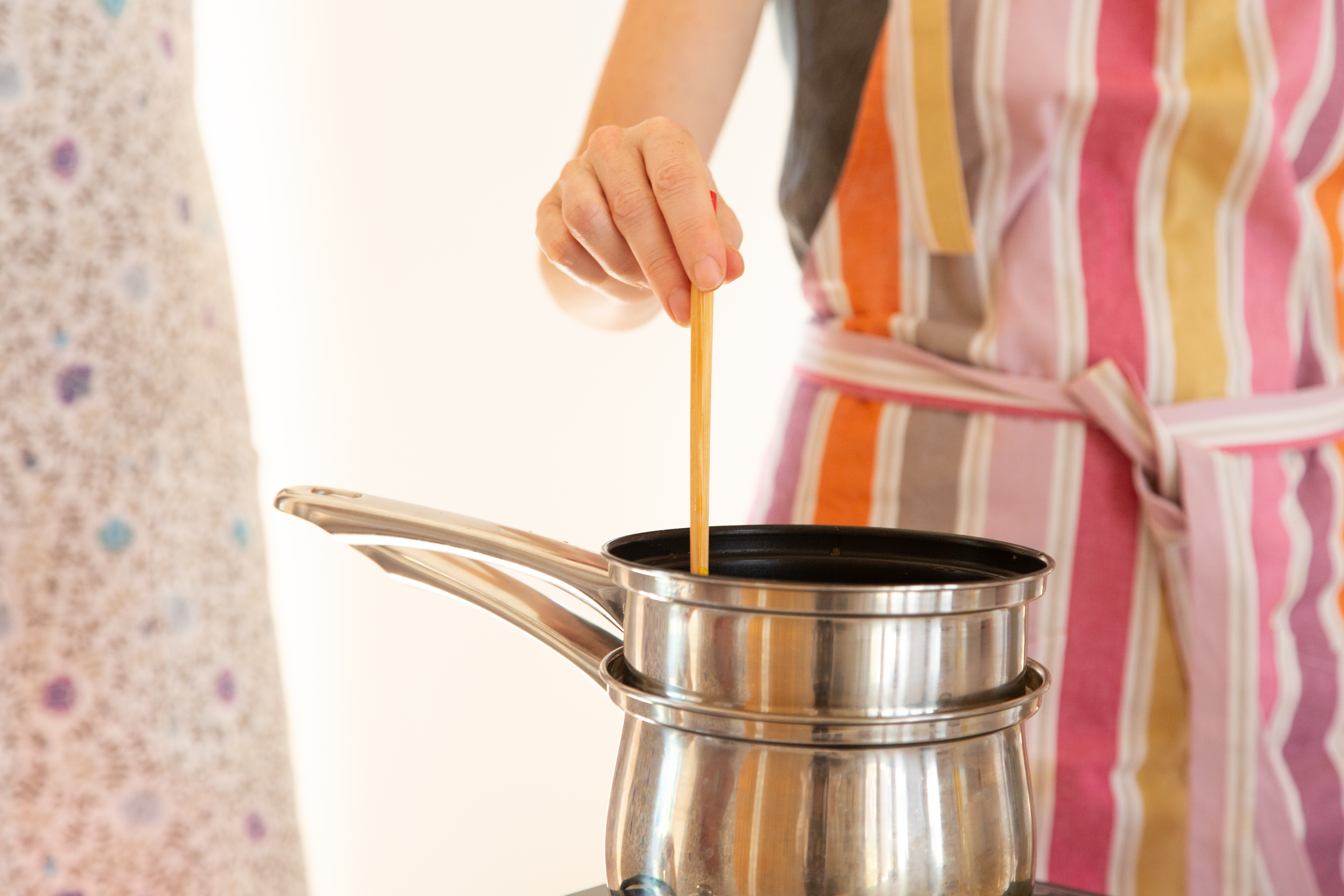
  • Bain marie (a sauce pan for heating water with another pan on top so ingredients are heated gently by the steam to avoid heating ingredients directly).
  • Pots (2 x 50ml glass jars)
  • Chopstick for stirring and blending

Instructions

  • Sterilise the pots by putting boiling water in them for a few minutes, then empty and ensure they are completely dry. This is important as the balm can go rancid if mixed with water.
  • Weigh out the beeswax and shea butter using the scale and weigh or measure out the base oil.
  • Use a bain marie to melt the bees wax and shea butter, then add the base oil.  As soon as it’s completely melted remove from the heat.
  • Let it cool a little before adding essential oils and vitamin e, so they are not affected by the heat.  If it begins to solidify give the mixture a stir.
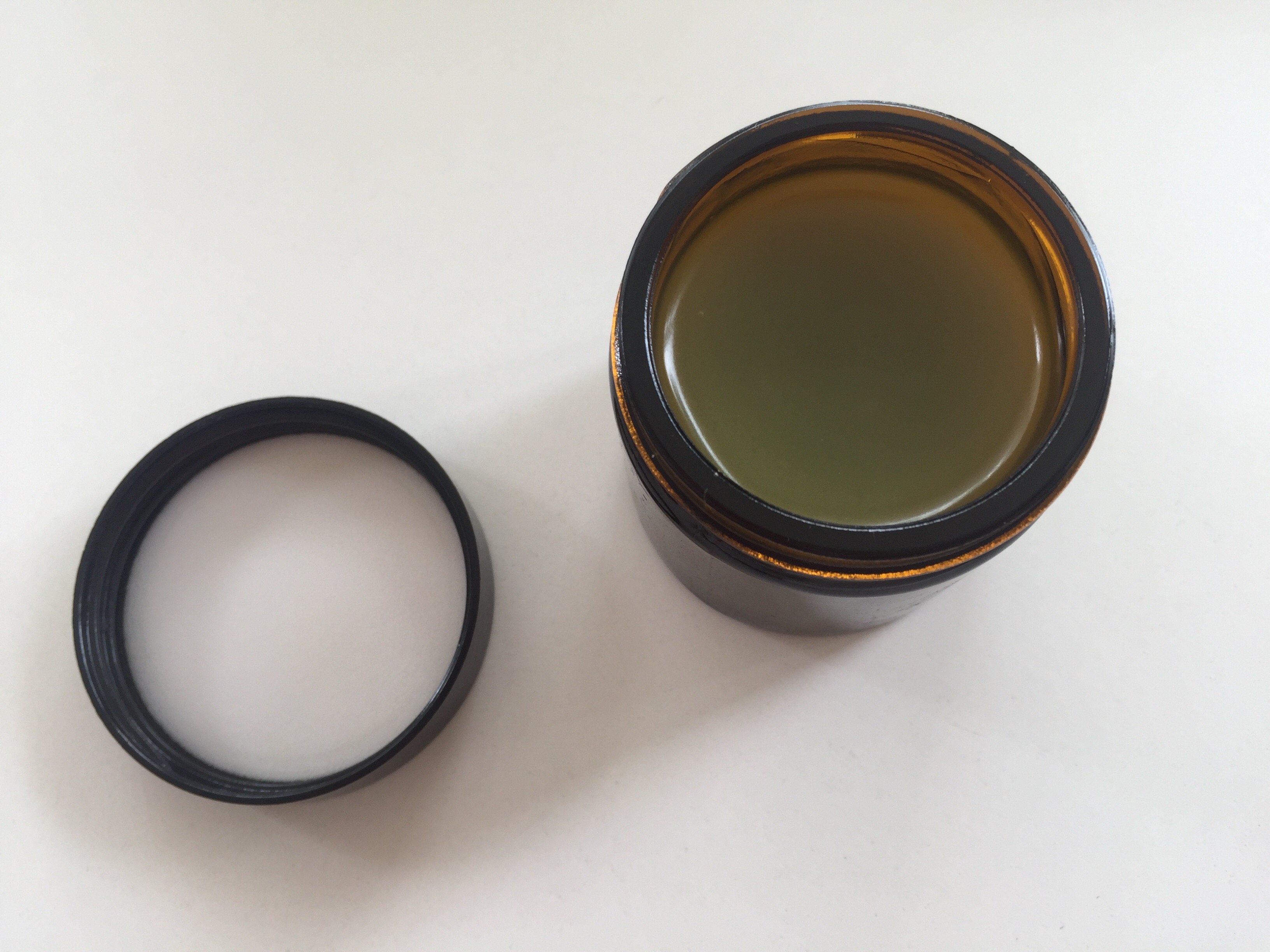
  • Pour the mixture into the containers and leave to cool and set.
  • TIP: I often pour the mix into the jars before adding essential oils, so I can make each pot a different flavour. Decide on which oils  and how many drops to add in advance, as the mix will solidify quickly once in the pots.

Useful Balm Recipes:

Here are some recipes for common uses,  just use the balm recipe above and add the following essential oils.

Chest Balm (to add to the 100ml balm recipe above) this recipe is not suitable in pregnancy, get in touch for a more gentle option.

  • 2.5% blend strength for application to chest to support colds, coughs and chest infections.
  • Thyme – 10 drops (0.5ml)
  • Eucaplyptus – 10 drops (0.5ml)
  • Lavender or Spike Lavender – 10 drops (0.5ml)
  • Myrrh – 20 drops (1ml)

Pain & Inflammation Balm (to add to the 100ml balm recipe above)

  • 2% blend strength for use on specific effected areas.
  • Chamomile (german) – 20 drops (1ml)
  • Lavender or Lavandin – 20 drops (1ml)

Cleansing Balm (to add to the 100ml balm recipe above)

  • 0.5% blend strength for use on the face
  • Lavender – 5 drops (0.25ml)
  • Lemon – 5 drops (0.25ml)

You can use this balm to cleanse your face, remove makeup and grime, just rinse with warm water or a warm cloth afterwards and your skin will be left feeling silky soft.

Beauty Balm (to add to the 100ml balm recipe above)

Use at 2.5% blend strength for stretch marks and scars, and 0.5% to use as a night time nourishing facial treatment.

  • Rose – 10 drops (2.5%) or 2 drops (0.5%)
  • Myrrh- 20 drops (2.5%) or 4 drops (0.5%)
  • Lavender- 20 drops (2.5%) or 4 drops (0.5%)

You can pick as many or as few oils as you like, but just ensure the total blend strength is appropriate (see blend strength charts below).

How much essential oil to use

1% Delicate blend strength (for face, damaged, sensitive skin & children)
Amount of base product No. of drops of essential oil to add
10ml 2
30ml 6
50ml 10
100ml 20
2.5% General blend strength
Amount of base product No. of drops of essential oil to add
10ml 5
30ml 15
50ml 25
100ml 50

*Coconut oil is also useful for a cleansing balm as it’s very greasy and lifts dirt and grime gently from your skin, it’s great to use on its own for removing eye make-up.

The Beauty and Simplicity of a Hand Massage

Laura and Neave hand massage 2

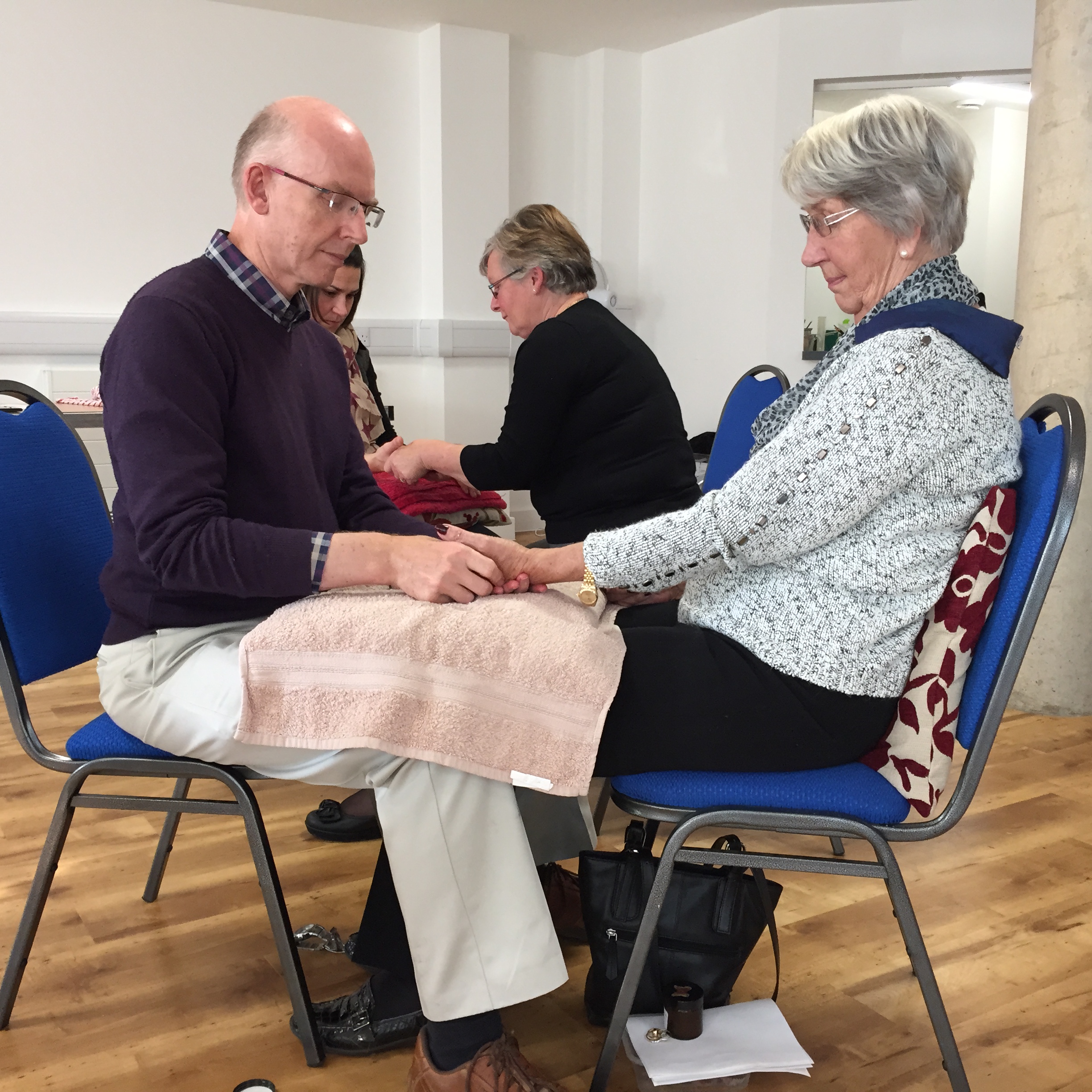
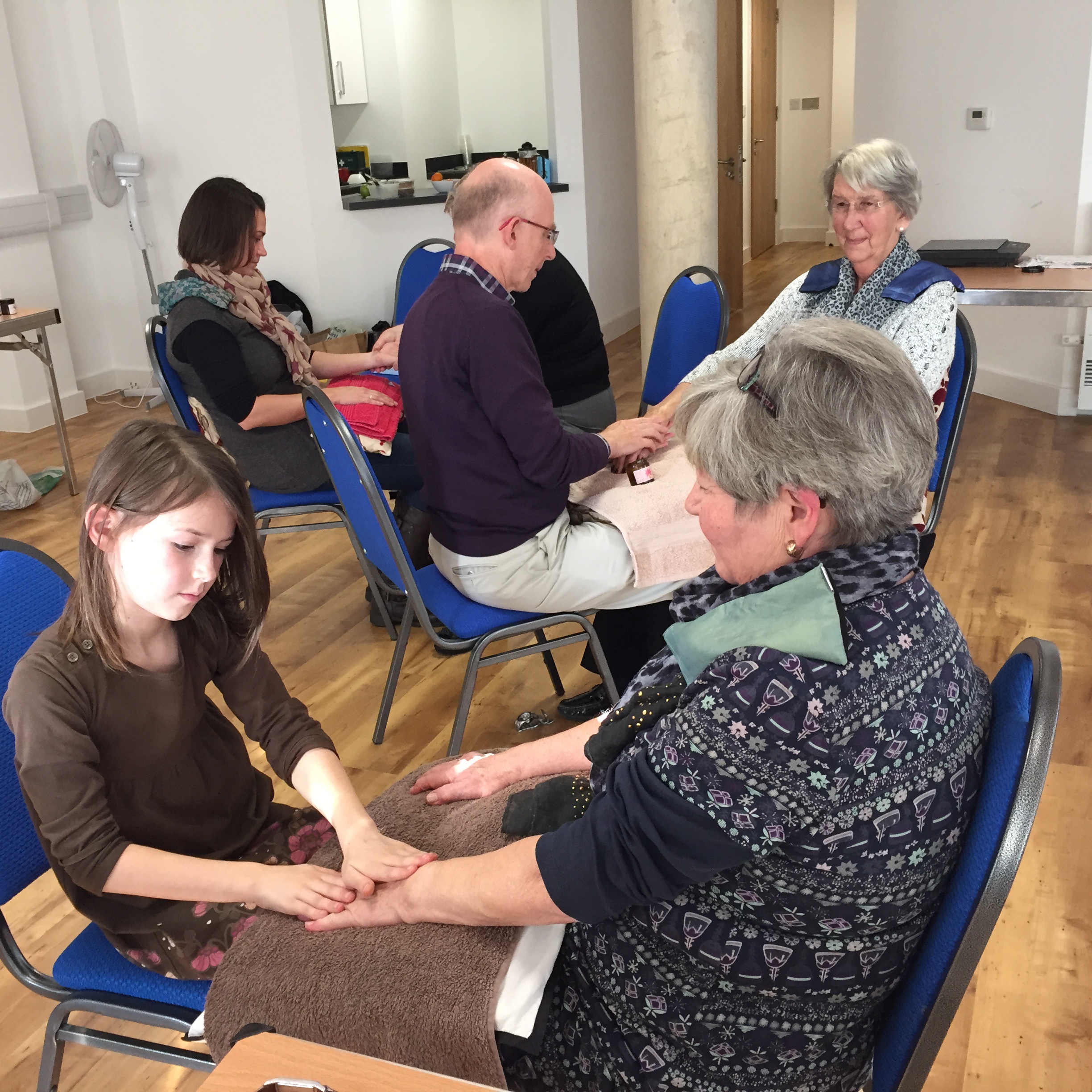
I decided to write this blog on hand massage as it is such a simple thing to do with friends, family and even colleagues. It can be done anywhere, at a friends house, a coffee shop, even in bed, it’s a great thing to do if visiting some one in hospital or who is bed bound, and you can take as little or as long as you like, even 2 or 3 minutes on each hand would feel lovely. Although it’s such a simple exercise, it can be deeply relaxing, connecting and supportive as well as fun. So here are some tips on how to give a hand massage: Choose a cream, balm or oil blend to use with your partner, you can use my recipes in previous blog posts to make your own cream, balm or massage oil or just use a little olive oil or hand cream, what ever you have handy. Make sure your partner likes the scent of the product you are using, if you have a few options it’s great to get them involved in the choice as smelling the oils/cream already brings them in touch with their body and what they are feeling.

Preparation: The most important thing to prepare here is you! hm

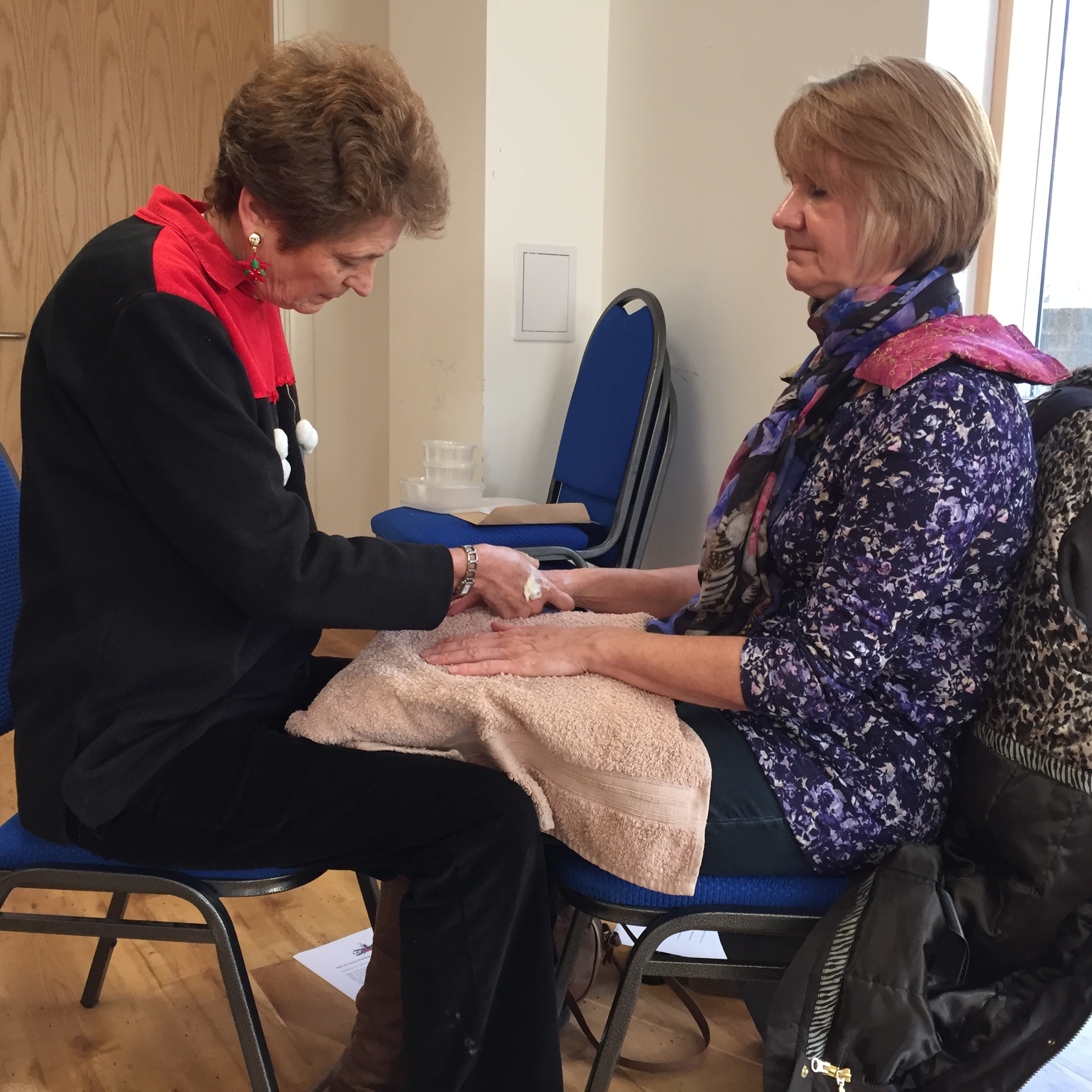
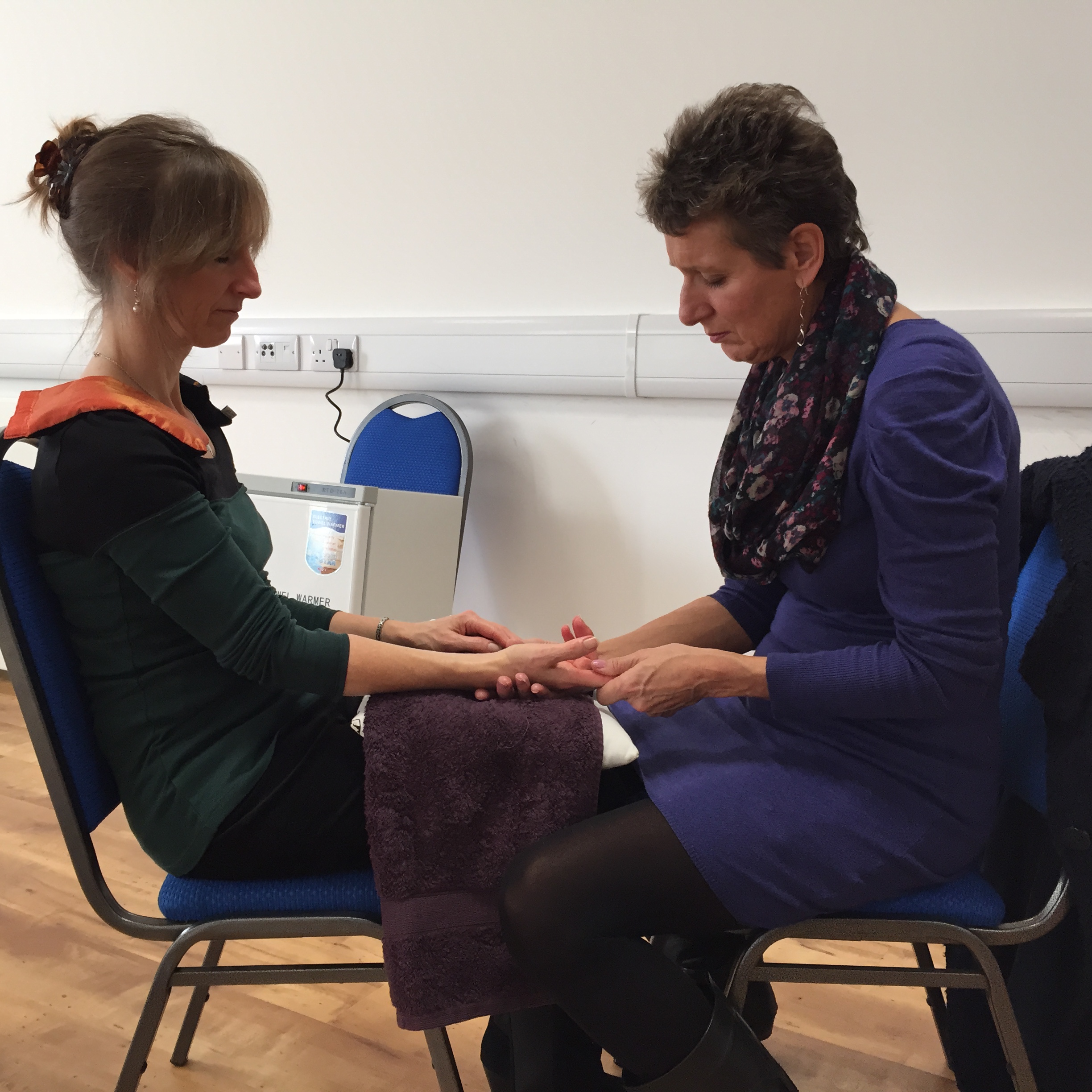
Ensure that you are in a comfortable position that supports you, and does not compromise your body, ensure your partners position is the same.  Be aware you need easy access to their hands and ideally forearms with out stretching, and remember to have your oil somewhere you can easily reach it. You might like to use cushions, move furniture around, get a table for the oil or ask your partner to adjust themselves a little for you, it’s worth taking the time to make the space supportive so you don’t feel stuck half way through with an ache (make sure you adjust if you do).  I usually place a cushion or pillow on their lap with a towel over it so they can rest their arms across it, and only the towel will get oily, but you may need to adapt depending on your partners position and movability.  It’s important to communicate with your partner, to let them know what you are doing so they feel supported and included. Just running through what you’re doing and why, so they know what to expect is enough. You may like to ask if you can remove watches or jewellery, I usually work around rings.

Hand massage workshop

Connection: I start by placing my hands as gently as I can over theirs and give them a few moments to relax. Don’t rush, even if you only have a little time, it will make all the difference if you start by being still and just take a few moments to breath gently in and out through your nose. If you notice your partner is very tense or holding their arms very stiff, just encourage them to let go of the tension, ask them to relax their shoulders to allow the hands to let go, if they are very stiff you can ask them to make their arms go floppy.

IMG_2124

Techniques: I then choose one hand to begin massaging, and apply oil to my hands and then massage the oil over the area I intend to cover (so forearm too if this is appropriate and accessible). You can massage both hands at the same time, but I like to do one so I can lift, manoeuvre and support the hand and wrist with the free hand, although I do start and finish by connecting with both hands. I start with long oval circles over the forearms to get the cream/oil applied evenly, I make the moves firm but gentle, flowing and I always make the circles anti-clockwise -a friend once described this as a releasing motion because when you loosen a screw it’s always an anti-clockwise movement, and it is clockwise to tighten it up.

IMG_2118

I like to massage each little finger as delicately as possible, hold their hand and do little circles with it to loosen the wrist, and press into the palm with my thumb in circles. One of my favourite moves is to sandwich the hand between my hands and to very, very slowly slide them off. There are lots of techniques to experiment with, so just do what you feel, stay focused on what you are doing, and connected with your partner. Be playful, ask them what they like and see what you like.

Being very gentle does not mean that the massage is less effective than pushing hard,  it feels like I’m allowing and encouraging their body to learn to relax itself, rather than forcing it to with pressure.  If the body can relax itself, then it is more likely to be able to continue this state.

Laura and Neave hand massage 1

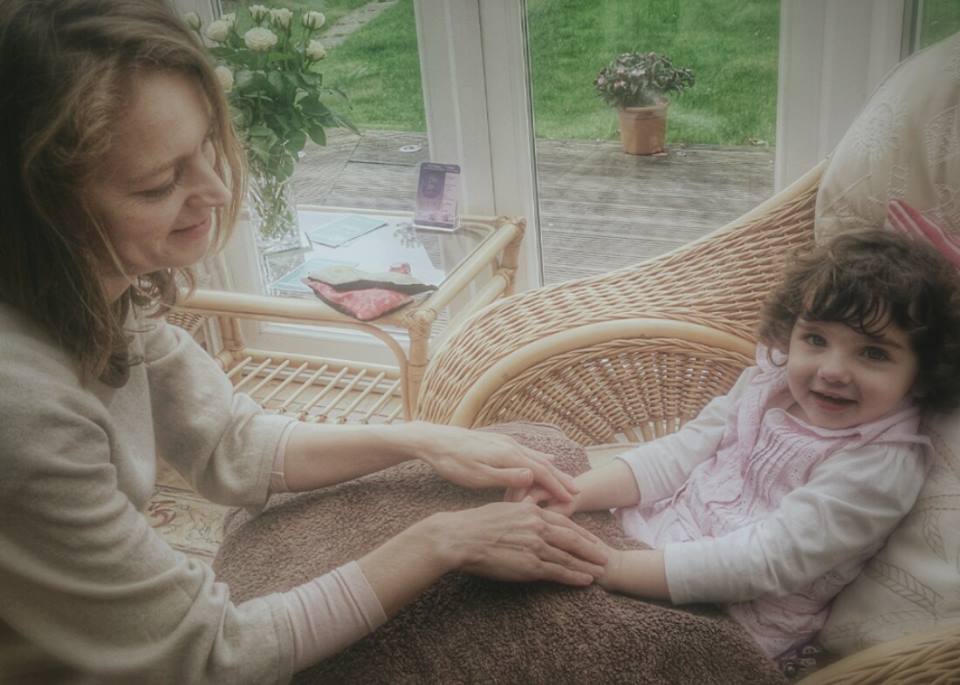
Preciousness: As you are face to face to your partner it is easy to talk to them, but keep the conversation related to the moment, how they feel and what their body is saying.  Sometimes just the touch or eye contact is enough, in my experience they often close their eyes and become deeply relaxed. This can be a really precious time with your partner who ever it is.  In the below image I am with my niece, we were only massaging for a couple of minutes but you can tell from the shot it was a magical moment, she also started to give massage afterwards on others and followed my moves perfectly, very beautiful : )

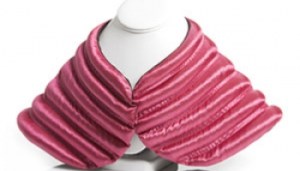
Accessories: A little addition to the treatment that I have come up with recently to support letting the tension in the shoulders go, is using heated healing eye pillows, I just warm them up on the radiator or in a towel warmer, and place them over the persons shoulders before I begin, one on each side across the bits that get very tense and hard – they feel gorgeous! You can buy them from Feather Light Productions website in Australia who also sell a body wrap that I’m about to try out as this will cover the entire shoulder area.  Tension across our shoulders is very common and we can all feel the release as soon as we let go of that tension, so it’s a great way to support this.

HEP-019FLP-HBW-taxonomy1

I have been working on community projects for the last couple of years mainly involving hand massages and have had such great feedback from the clients that I have started developing workshops and bringing hand massage to many other situations including at work and home. Most of the photos were taken at a workshop I ran recently, during the time everyone one was giving hand massage (with balms they had just created themselves) the entire room felt completely still, it was absolutely gorgeous.

If you have just 5 minutes with a friend to try this out, I’m sure you will enjoy and feel the difference in your hands and how relaxed you feel. We can be very careless and rough with our hands, so it’s a great way to bring a care and attention back to a part of our body that we use so often.

With thanks to Neave, Molly, Jean, Louisa, Ellen, Kathie, Sonia, Alison, Betty, Heather & David ~ all starring in the photos above.

You might also like to read my blogs on Taking care of your hands, Essential oils in hand & nail care and Myrrh essential oil- supporting connection with my wrists.

Essential Oils on Film

Sorry film footage is no longer available to view, hope to update soon…

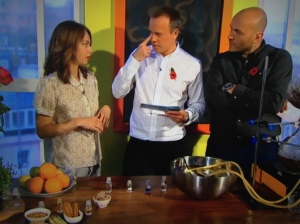
‘Sunday Brunch’ Channel 4 TV show appearance, Sunday 2nd November, 2014.

IMG_2049

On live TV, sharing with presenters, Tim Lovejoy and Simon Rimmer, some useful information about using essential oils including:

How essential oils are made by steam distillation:

IMG_2058

How herb & spice oils support digestion,

IMG_2042

Why it’s important to enjoy the scent,

IMG_2053

Why rose essential oil is so expensive and how wintergreen essential oil is great for helping muscles to relax.


How to Carry Out a Patch Test with Essential Oils for Sensitive Skin

Essential oils are highly concentrated and can sometimes cause irritation and are generally diluted before using them on your skin.

Even when diluted essential oils can cause reactions to more sensitive skin types and so carrying out a patch test before using the oil in certain circumstances is recommended.

When to carry out a patch test?

It is worth carrying out a patch test before using essential oils on your skin in the following situations:

  • if you have very sensitive skin,
  • if you are generally prone to allergies,
  • if you have very young or aged skin,
  • if your skin is diseased or injured.

How to carry out a patch test:

  • Mix a very small amount of the blend you intend to use. (See blog post on blending for safe blend strengths).
  • Using the inside of the forearm, apply a couple drops of your blend to the pad of a band aid and keep the bandage on the skin. After 48 hours remove the bandage and check for irritation.
  • If the skin under or around the bandage becomes red, swollen, itchy, or develops blisters, that is a reaction and you should avoid skin exposure to the blend you tested. 
  • You can remove the bandage as soon as you become aware of a reaction, you do not need to leave it on for the full 48 hours.

Note: It is generally accepted that lavender and tea tree essential oils can be used neat on the skin, and they are very useful to apply to minor first aid situations, like small burns, cuts, spots, bites, but again it is worth carrying out a patch test if you have any of the above mentioned conditions.

Diluting essential oils in a base oil (eg. Olive oil, Almond oil) is ideal as they themselves have many nourishing properties that your skin can also benefit from.  Generally they are full of vitamins and fatty acids that help keep skin healthy and vital.  They also help the essential oils absorb into your skin more easily.

You do not need to dilute essential oils when using them in a burner, diffusor or for inhalation, in fact using a base oil in a diffusor may damage it.

How to Gargle with Myrrh Essential Oil

Gargling with an essential oil is useful for helping various oral health issues, but it’s important that the essential oil is diluted in olive oil (or another base oil) before being added to the water as the essential oil doesn’t dilute in the water itself and is too concentrated to be in direct contact with the delicate lining of your mouth.

There are two recipes here, one is for acute oral health conditions, where you would use a higher dilution for a period of a few days while the condition clears, for example: sore throats; coughs; chest infections; mouth ulcers; laryngitis; gum disease; halitosis and oral thrush.

If you want to use the gargle as part of your day to day mouth care routine, then use the lower dilution recipe, this would be suitable to use after cleaning your teeth for general mouth health & fresh breath.

Mouth Gargle Recipe – dilution for intense treatment:

All you need is a trusty egg cup (or any little container to hold enough water for a mouth full),

  • two drops of myrrh essential oil (or lavender essential oil – or one of each)
  • half a tea spoon of olive oil (3ml)
  • some water (enough for a mouthful),

Instructions:

Add two drops of myrrh to the olive oil and blend evenly. Fill the egg cup or small container with water, and add the mix of olive & essential oil, then take the water into your mouth, and gargle for as long as you can.  Do not swallow.

Mouth Gargle Recipe – dilution for general every day use:

Use the following recipe for a natural mouth wash after cleaning your teeth:

  • one drop of myrrh or lavender essential oil – use peppermint essential oil for an extra fresh feeling.
  • one tea spoon of olive oil (6ml)
  • some water (enough for a mouthful).
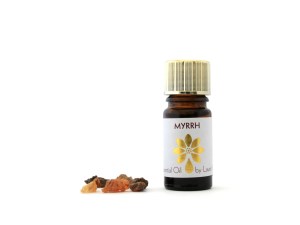
Click here to buy Myrrh Essential Oil
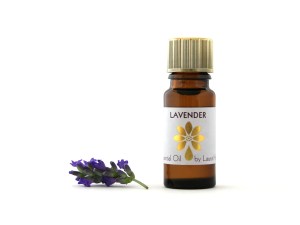
Click here to buy Lavender Essential Oil.
Click here to buy Peppermint Essential Oil.

How to use Myrrh Essential Oil – Connection and Massage

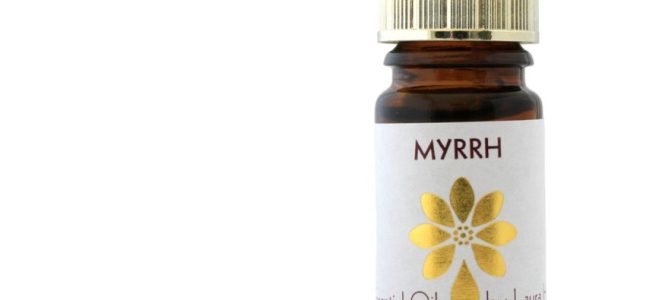
Myrrh essential oil is a great oil for supporting connection with self, its subtle aroma encourages a level of stillness to allow an appreciation of the scent. Gently massaged around your wrists brings focus to this delicate area of the body. The oil is made from a resin produced by the Commiphora myrrha tree; when the bark of this tree is damaged or cut the resin is released to seal the wound and this action is mimicked by the essential oil which is used in deep and difficult to heal wound care.

leonardo-da-vinci-paintings-and-drawings-hands-of-mona-lisa-1503

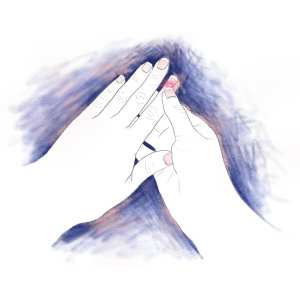
I wanted to share my recent experience of using myrrh essential oil in a cream, or an oil, and massaging it into my wrists. My wrists feel very delicate and precious, and it becomes natural to do this massage very tenderly and to really take the time to feel my wrists.

My wrists seems to be a piece of my body that in the past I hadn’t given much focus to. A friend of mine, Chris James, made a point of getting people to feel their wrists during one of his workshops (his workshops are an amazing way to really connect with your body and your self).  He literally kept saying ‘Feel Your Wrists’ throughout the entire weekend.  It resonated with me and I started to notice many points through out my daily life that my wrists were being used.  Right now as I type on my key board for example, and when I’m driving in my car, these were initially two very obvious moments that were easy to bring attention to my wrists during the day.  As I began to notice them more, I actually realised how rough and careless I could be with them, the way I picked things up, closed doors or dried them in a hurry and I became aware of aches and discomfort. When I noticed this, I’d consciously take a moment to let go of any tension and let my wrists go floppy. Now, if I’m in  my car and stuck in traffic or at lights, then I often turn my wrists over as gently as I can and then back again or I notice if I’m holding the steering wheel with tension, and let my hold become more relaxed. When I’m at work I have a ‘wrist guard’  and a ‘mouse guard’ which is a foam pad to support my wrists as I’m typing, it lets my hands drop down, which feels more supportive to me.  I have recently incorporated a specific stretch for my wrists and hands during my morning exercises, all very simple ways to support my wrists.

It still took some time before I actually sat down to do a massage though, as there was something uncomfortable about massaging my wrists, it feels like such a tender, sensitive part of my body.  I knew I was avoiding it, so I began with just holding or feeling my wrists and then just massaging them without any cream or oil if they ached.

Divinities Touch by Kelly Basford

Eventually I decided I wanted to give my wrists that extra bit of care and attention and I began by mixing a couple of drops of myrrh essential oil into a pot of cream (see my blog on how many drops to use in a blend).  Myrrh is a particularly viscous oil and it can take a really long time for a drop to fall from the bottle* so this process encouraged me to be present and if I noticed I was impatient, then I’d know I really needed to slow down and let the drop fall naturally.  The massage itself only takes a few moments, and I generally apply a little cream in anti-clockwise circles, when I’m in bed in the evening.  Sometimes they feel tender, sore or achey, and I  just notice this, and except that I have been using them a little too harshly and this awareness generally leads to naturally becoming more gentle when I use them.

I’ve been bringing focus to my wrists (as well as hands and finger tips) for some time now, and looking back over the last year, I can really appreciate how the more attention I have bought to this part of my body, the more gentle I have become with them.  It’s in the way I wash my hands, apply lotion afterwards, the way I close doors, chop vegetables, the way I open boxes or do the washing up. I feel the flow of this gentleness beyond my wrists, it’s up my forearms, across my shoulders and even in the way I use my whole body. I am more aware and more gentle than in the past and it continues to deepen. I can really appreciate how beautiful my wrists, hands and fingertips are and often enjoy moving them with grace and delicacy as if I’m dancing.

See my previous blog posts Taking care of your hands and Essential Oils in Hand & Nail care for more related reading.

Click here to buy Myrrh Essential Oil.

*Please note that myrrh essential oil oxidises very easily -this means that it reacts with oxygen, and it actually becomes very very sticky and stiff, so although you do need to be patient when dropping it from the bottle because it is thick, it is possible that it will oxidise and at some point will no longer drop from the bottle. In fact it can reach a point where you can’t get the lid off. Mine never usually lasts this long, but it would depend on how much it is exposed to the air, or if the bottle is close to empty then there is more air that it can react with.

CAUTION: Myrrh essential oil should not be used during pregnancy, I would recommend replacing myrrh with another essential oil to support your wrists for example, rose, frankincense or lavender. In fact, even if you are not pregnant, you may choose another oil that you feel helps you connect or that you particularly enjoy.

How to make Fresh Mint Tea and Appreciate the Benefits of Essential Oils

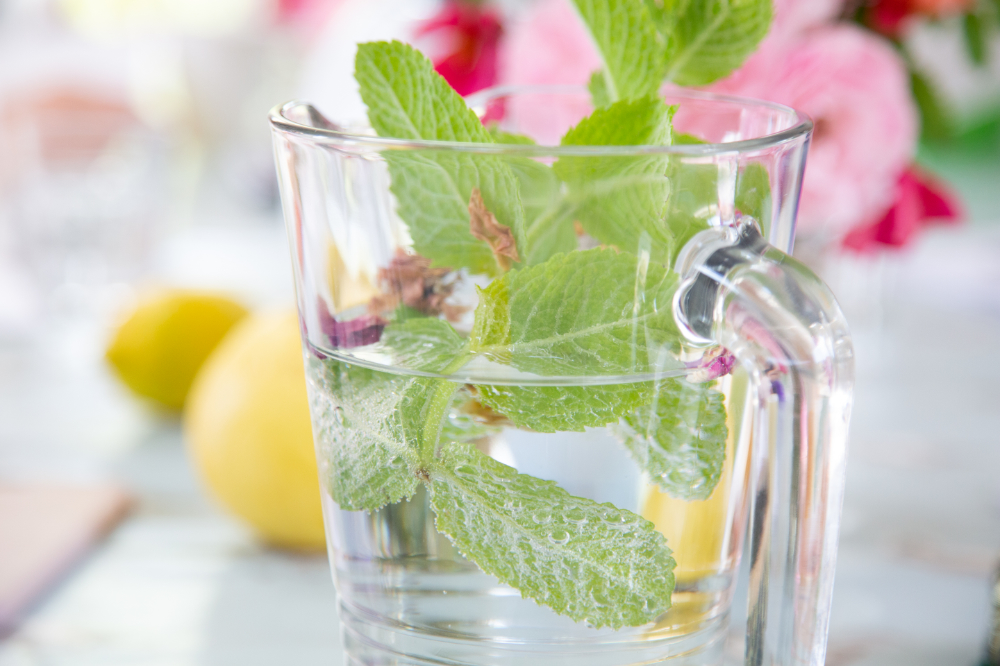
I recently ran a workshop and used a mint plant to illustrate what essential oils are and where they come from.  In the case of peppermint the essential oil is held in the leaves of the plant, and literally brushing your hand over the leaves is enough to release the essential oil, which in turn releases the scent.  Peppermint is a great oil that really supports digestion and sometimes just the initial smell from the plant can stimulate our appetite, make our mouth water and our tummy rumble as our body releases various digestive enzymes in preparation for eating.

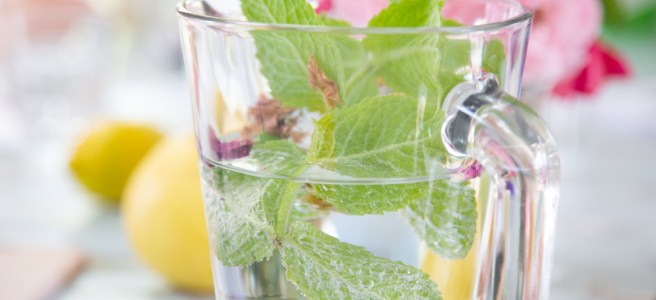
Fresh Mint Tea – a cup of mint tea is a great way to use peppermint regularly to support your digestion.  Dried herbs which are usually used in herbal tea bags will contain a very small amount of essential oil which is why they don’t smell as strong as when fresh. So making a pot of mint tea using the fresh leaves from the plant will ensure you experience more of the benefits of the essential oils.

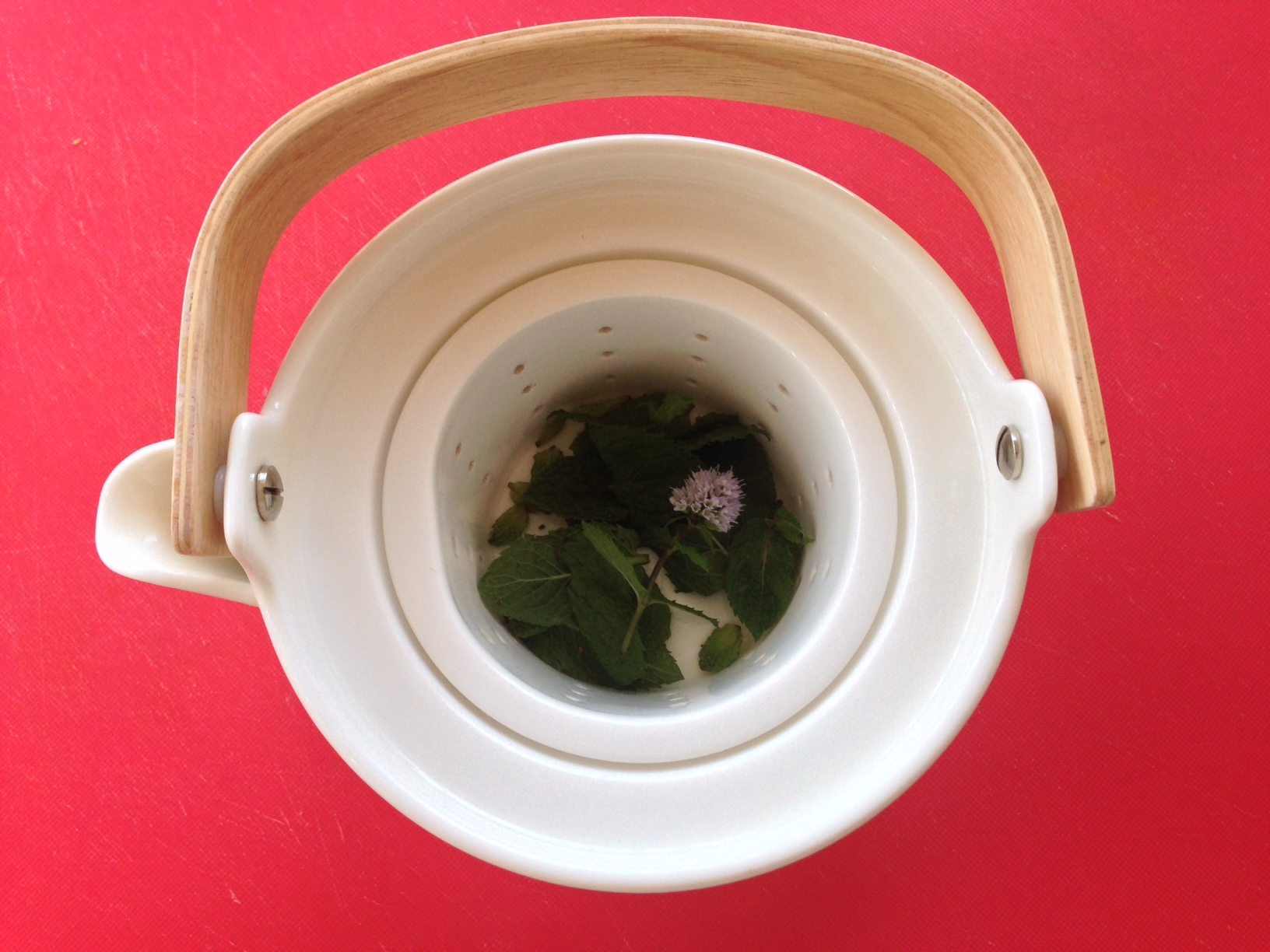
If you don’t happen to have a mint plant in your garden or close by to harvest from, you can buy a bag of fresh mint from most supermarkets, or a pot from a garden centre would be handy for regular use. All you need to do is pluck a few leaves from the stems, give them a rinse and pop them into a tea pot. I like mine strong so I usually use around 10-20 leaves, then add boiling water and let it brew for at least 5 minutes.  It’s very refreshing, and I’m sure you will appreciate the difference compared with using a peppermint tea bag -I’m really not a fan of tea bags, but if it’s all you can get hold of, it’s still worth making it in a tea pot, because the boiling water releases the essential oils from the plant material in the steam, and once you have the lid on the tea pot you capture the precious oils to enjoy more fully when you pour.  It also feels much more nurturing to have made a pot, I like the ritual of making the tea, taking the time to let it brew, choosing the cup, and I love drinking it when the temperature is just perfect.

When I go out to a restaurant or café, I often ask for a fresh mint tea at the end of the meal, as it supports digestion.  Even if they don’t advertise it on the menu, they will usually have some fresh mint in the kitchen and are usually willing to make up a pot for me -so much nicer than a tea bag.

The essential oil is much more potent than the leaves of the plant, so if you want a more powerful effect to support more serious digestive complaints you can actually buy capsules that contain peppermint essential oil in, which can be very effective.  Peppermint tea will still be very supportive for conditions such as constipation, IBS, bloating, indigestion. You may also like to read my blog on digestive massage for these symptoms.

Lemongrass tea by Spice & Smile

Some other delicious teas to support you… Lemongrass Tea – for a lovely, light, slightly sweet tea, try this recipe for lemongrass tea by Thaïs from her beautiful blog Spice & Smile , again you will be benefiting from the lemongrass essential oils in this and it’s a great one to help with bloating.

Lavender or Chamomile tea – to support winding down in the evenings you can make a fresh floral tea with flowers from lavender and chamomile plants as they are all soothing and calming in effect. Lavender can be a bit bitter, so I prefer to mix it with something like mint or liquorice.

Rose petal tea – a few rose petals mixed with a fresh mint tea is a particularly good combination, a couple of rose buds is enough to compliment the mint, or half a tea spoon of petals. Make sure the rose petals or buds are suitable for consumption and for use in tea. You can purchase the roses and other herbs for use in tea from Fiona Pierce at www.loveinacup.co.uk

For some gorgeous inspiration on cleaning your tea pot & making yourself shine, read this beautiful blog: Aladdin’s Lamp – Cleaning a Tea Pot.

CAUTION: Do not ever put drops of peppermint essential oil (or any other essential oil) into a glass of water and drink it! This is extremely dangerous practice that is advised by unprofessional or untrained persons.  Essential oils, in their undiluted form are highly concentrated and by nature hydrophobic, meaning they do not mix with water, therefore the very delicate lining of your digestive system is exposed to the concentrated peppermint essential oil. Even if there are no immediate problems, it can be causing issues that become apparent after time.

How to Use Lavender Essential Oil to Help Sleep Problems

Lavender essential oil is often used to help with sleep problems, it has a very clearing effect in general which is useful as quite often people struggle to sleep because they are stressed, tense or their mind is racing, and lavender can help to clear and ease these symptoms.

There are some great ways to use lavender as part of a wind down routine before bed, to support the body in preparing for a restful night.

  • You could simply use lavender oil in a burner to scent your bedroom before you get into bed;
  • taking a bath with lavender oil in the evening is a great way to really relax your body and let go of any tension held from your day;
  • it can be as simple as sprinkling a few drops of essential oil onto your pillow at night or on a tissue placed under your pillow.

It’s more about the way you do it, rather than what you actually do -so having a bath isn’t going to be better than a drop on your pillow, it’s all about the quality.  The preparation for bedtime before your head hits the pillow, will support the body greatly, compared to an evening of distraction (TV, computer, etc.), and waiting until you feel really tired and then getting into bed and hoping you’ll sleep because you’re so dog tired.

Bringing lavender into your evening rhythm can be much more effective at easing the stress of the day, and a busy mind.  It’s worth experimenting to see how you like to use it:

  • it maybe that you use it in a face cream that you apply in the evening and this is the way you really love to use it,
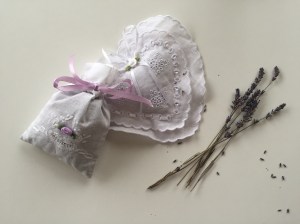
  • or you might have a lavender bag that you hang by your bed, and you sprinkle a drop on each night so you can enjoy the scent.

It’s important that it is something for you, rather than something you ‘do’ to try and make you sleep ‘better’… if you’re intention becomes about supporting yourself, rather than to fix the sleeping issue, it can be so much more effective, especially in the long term.

Lavender Scented Bedding

The cleansing action of lavender makes it very appropriate to use in washing powder and fabric conditioner.  Just add a few drops (5-10) of lavender essential oil with the fabric conditioner to the washing machine (you can also add it to the washing powder/liquid if you prefer) and your wash will come out smelling heavenly.  It’s such a simple touch but actually brings plenty of health benefits as well as the lovely smell, because lavender essential oil has an anti-microbial action, your lovely smelling bed sheets and clothes will also be fighting off germs as you wear them.

You could also add lavender floral water into the iron rather than just water when ironing bed sheets, this is such a treat when you get into bed and your whole body feels lovely under the sheets. Make sure you don’t use the essential oil in the ironing water, as the oil may leave a stain on your clothes. Floral water has had the essential oil filtered out so it won’t leave any marks.

Make sure you use a good quality essential oil and not just a perfumed synthetic oil.  You can still enjoy benefits and effects from the perfumed smell, but a good quality essential oil will be more beneficial, (a synthetic version will not have anti-bacterial properties) and the natural scent will probably smell much nicer.

Click here to buy Lavender Essential Oil.

For more uses for lavender essential oil see Lavender, Essential First Aid.

How to Use Essential Oils in Hand and Nail Care

How to take care of your hands and nails with essential oils and carrier oils and make your own nurturing nail oil.

Click to Shop Custom Nail Care Blend.

Using vegetable oils and essential oils can be very nourishing and support healthy nails.  I always cut my nails down to the absolute minimum since I had had eczema in the past and wanted to avoid scratch damage, it was also recommended to keep them short when I was studying massage. So, when a friend mentioned how much more delicate you naturally became with longer nails, I decided to experiment and grow my nails a little.  I became much more aware when using my fingers in various ways, for example, shutting doors, lifting things, opening cans etc., and I became more delicate in the way I did these things, which really felt gorgeous.  If I was rough with my hands then it would be more obvious and show me I wasn’t being so delicate, I flipped my nails back a few times which really stopped me in my tracks.

Divinities Touch by Kelly Basford

Nail oil

Designed to massage around the nails and on the skin just before the nails begin to grow. Applying it to this area supports healthy nail growth, as this is where the new nail is being formed.

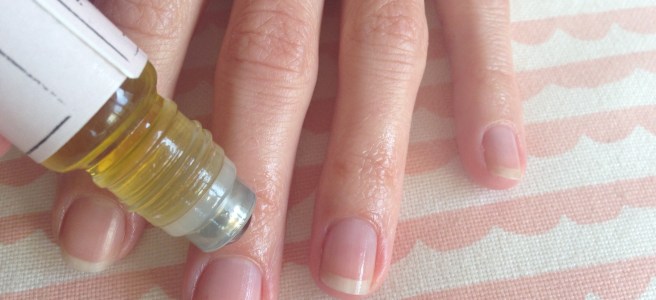
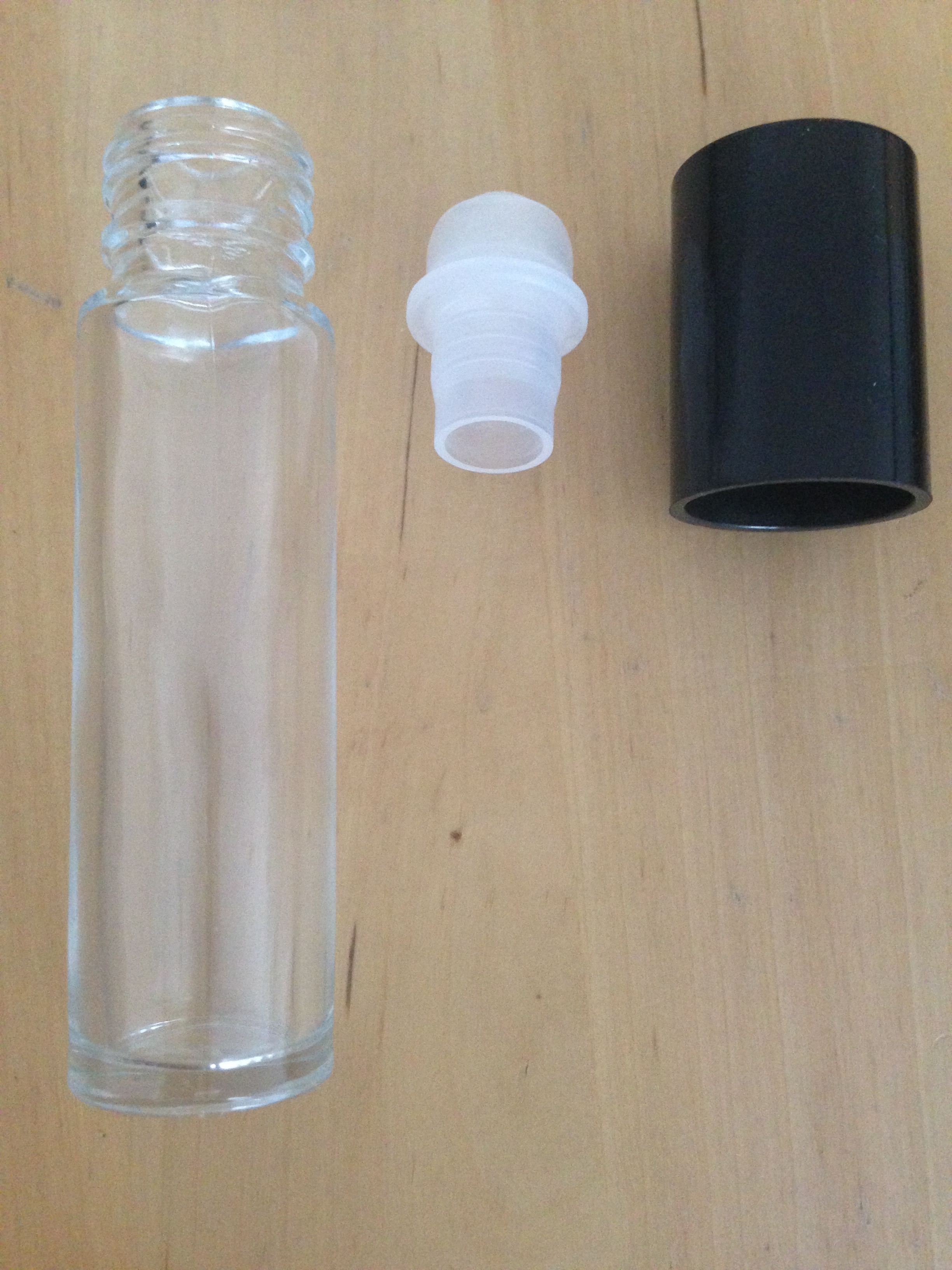
It is very simple to make your own and I use a ‘roller’ bottle to dispense the oil.  It comprises of a small glass bottle, a roller ball top (that releases a little oil across the skin when you pass it over), and a cap.

rolette parts

They usually come in 10ml bottles, and the recipe below is for a 2.5% blend strength, but you can adjust the recipe if needed using the charts on my previous blog post ‘How many drops should I use?’:

Ingredients

*If you can’t use nut oils due to allergies then I would suggest using organic apricot oil and or argan oil instead.

Nail Care Blend by Kelly Basford

Instructions

Measure the quantities of base oil (macadamia and almond) and pour directly into the bottle, then drop essential oils directly into the bottle, fix the roller ball cap and lid and give it a shake to disperse the oils evenly.  Myrrh is quite thick and gloopy, so you may see the drop of oil sink to the bottom, so you will need to shake it well to ensure it has mixed through. Roll the oil just under the nails each day, and enjoy. Ensure you put a label on the bottle so you don’t forget what it contains.

Ingredients to make your own nail oil blend are available to order from my webshop or Click here if you would like to order a ready made nurturing nail oil blend.